Visiting Grand Bassin, the sacred lake
Everything about Grand Bassin Mauritius (Ganga Talao), the island’s sacred Hindu lake: practical information, history, tips and what to see.
Book your Grand Bassin excursion in Mauritius
Giant statues of Shiva and Durga, monkeys around the lake, a tika on your forehead: to visit Grand Bassin, send us your dates and your hotel on WhatsApp and we will arrange the trip and the visit.
Customer service available
Secure payment
Instant booking

Hindu culture at Grand Bassin
If you are interested in culture and spirituality, here is a stop not to miss in Mauritius: Grand Bassin, also called Ganga Talao, is one of the most important sites of Mauritian Hindu culture.
Set more than 500 m (1,640 ft) above sea level in the green highlands of the Savanne district, this sacred lake is a religious site, a place of prayer and pilgrimage.
Also read our article on yoga in Mauritius
What is the history of Grand Bassin in Mauritius?
Where the name Ganga Talao comes from
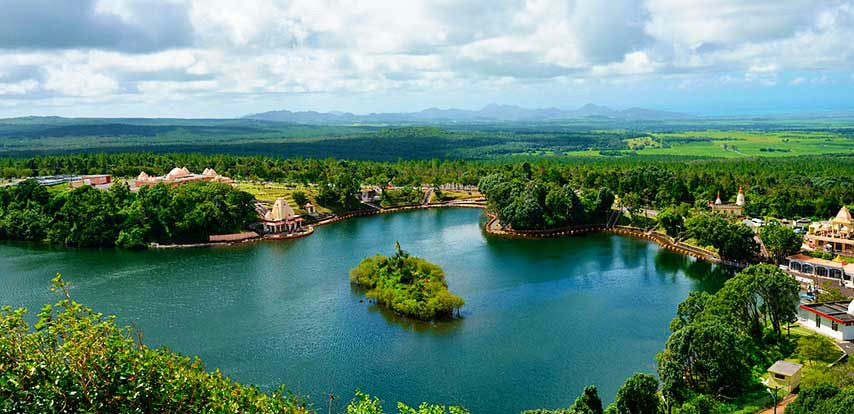
Grand Bassin is in fact an old volcanic crater filled with water, now a sacred lake for Hindus in Mauritius.
The history of Grand Bassin, also known as Ganga Talao, goes back to the late 19th century and the mass arrival of indentured workers from India. These Hindu communities were looking for a place of worship that recalled the Ganges, India’s sacred river, and little by little they made this lake in the island’s highlands their own. In 1897, a Hindu priest from Triolet is said to have had a mystical vision telling him that the waters of the lake were spiritually linked to those of the Ganges. That event marks the start of pilgrimages to Grand Bassin.
A Hindu legend also says that Lord Shiva, charmed by Mauritius, let a few drops of Ganges water fall on the very spot where the lake now lies, making it sacred. To root this belief, priests from India symbolically poured Ganges water into the lake in 1972, and the name Ganga Talao, “Lake of the Ganges,” stuck.

A place of pilgrimage
Every year, thousands of pilgrims walk here to celebrate Maha Shivaratree, one of the island’s biggest religious festivals, held in February or March.
Maha Shivaratri means “the great night of Shiva.” During this traditional Hindu festival, after several days of fasting, worshippers dressed in white walk the roads to Grand Bassin carrying their richly decorated Kanwars (a kind of arch or altar) as an offering to Shiva. At the sacred lake, the pilgrims pray, sing and make offerings. At daybreak, a meal is shared to break the fast.
If you go to Ganga Talao then, the sheer width of the road leading to the lake shows how deep the fervor runs across the island during the festival. It is powerful to witness if you happen to be in Mauritius at that time of year.
Tips and information for planning your visit to Grand Bassin
What to see and do at Grand Bassin
1. Walk around the sacred lake 🚶♂️
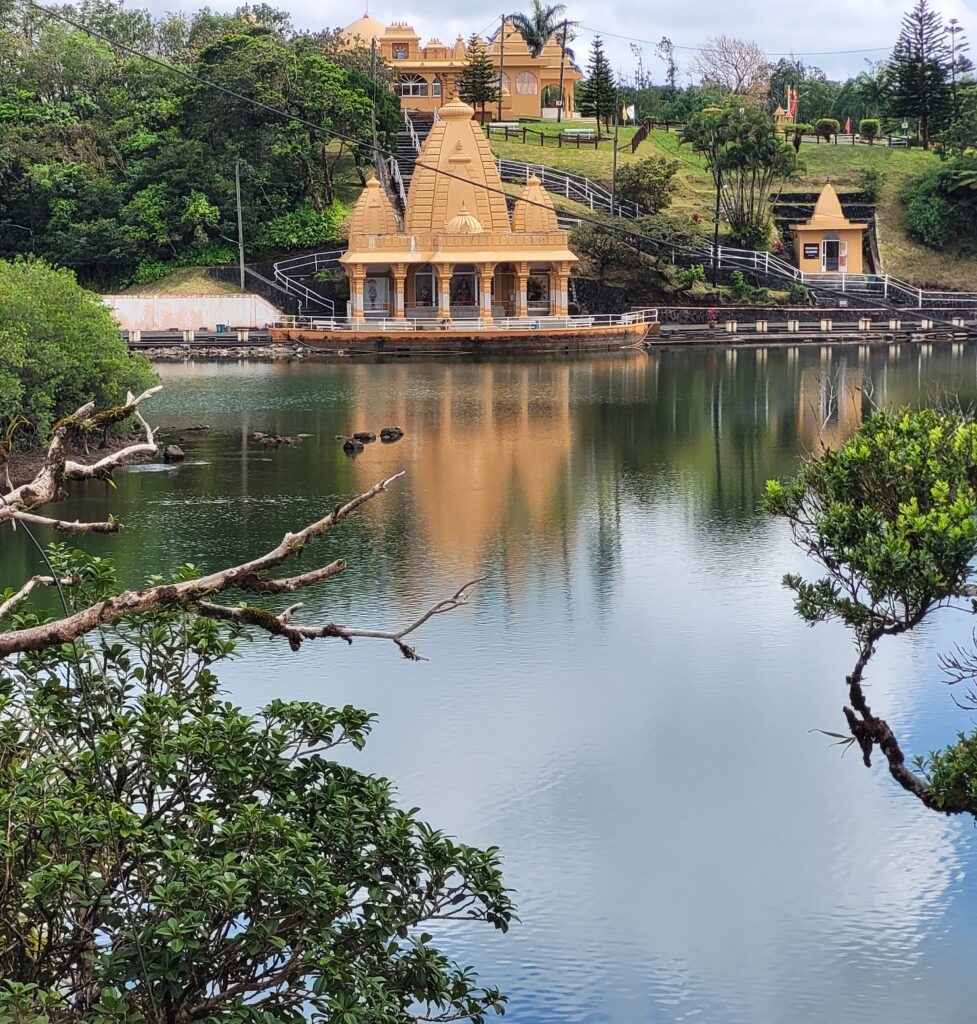
Surrounded by trees and often wrapped in mist, the sacred lake, dotted with statues and temples, invites quiet reflection. You can walk all the way around it and watch worshippers make their offerings. From the highest temple you get a great view of the surroundings and the two huge statues the place is known for.
2. See the giant statues of Shiva and Durga 🗿
At the entrance to Grand Bassin, you can’t miss the two huge statues that tower over the site.
The first, built in 2007, shows Lord Shiva in all his majesty: it stands 33 meters (108 feet) tall, a highly symbolic number in the Hindu tradition. Shiva, the Hindu god of destruction and creation, is shown with his trident, in a peaceful, protective pose. It marks the entrance to the sacred site and impresses as much by its size as by the serenity it gives off.
Directly opposite, across the road, another colossal statue has stood since 2017: that of the goddess Durga, also 33 meters tall. It is simply the largest statue of Durga in the world. Riding a lion, the ten-armed goddess embodies feminine strength and protection against dark forces.
Why 108 feet? In Hinduism, the number 108 is considered sacred. It stands for the union of body, mind and universe. It appears in the mala (prayer beads), which have 108 beads, and in the 108 names some deities bear. The number is also tied to ancient astronomical and spiritual calculations, which reinforces its place in religious rituals and symbols.
3. Learn about Hinduism through the temples and statues 🛕
Colorful and richly decorated, the temples around the lake are open to everyone. Remember to take off your shoes before going in, and dress modestly. You will see the different Hindu deities shown in the statues around Grand Bassin: Durga, Ganesh, Hanuman, Lakshmi, Shiva, Vishnu…
4. Get a tika on your forehead 🎨
In some temples, visitors can receive a blessing from a Hindu priest if they wish. It is a spiritual moment open to everyone, even if you do not practice.
The priest then marks a tika (or tilak) on your forehead. This mark, traditionally red, symbolizes Shiva’s third eye and is made at the spot of the sixth chakra. It is said to bring good luck, and is applied during a religious ceremony or as a welcome.
5. Watch the monkeys around the lake 🐒
When you visit Grand Bassin, you will almost certainly see troops of monkeys, called “zakos” in Creole, drawn by the worshippers’ offerings. Children are usually delighted to watch them, especially as it is common to see mothers with their young.
They live in the surrounding forests and have gotten used to helping themselves to the food left in front of the statues and temples. Keep an eye on your belongings: these monkeys are curious, bold and known to snatch things…

Rules and etiquette for your visit:
- 👕 Dress respectfully (shoulders and knees covered).
- 🎒 Keep the noise down during prayers or ceremonies.
- 📸 Photos are allowed, but be respectful of worshippers.
- 🐒 Watch out for monkeys: they are cute but can steal.
When to visit Ganga Talao
- ✅ Year-round: open 24 hours a day.
- Ganga Talao opening hours: the site is open every day. The temples open early and close at the end of the day.
- 🔥 Maha Shivaratree (February/March): the high point of the year, with thousands of pilgrims in procession.
- 🍃 Off-season (May to October): quieter and better for contemplation.
How to get there
You can go by car, bus or taxi, depending on where you are staying. The visit is often part of a full-day tour that takes in several sights in the area.
Here is the distance to Grand Bassin from the island’s main areas:
📍 17 km (11 miles) from Chamarel
📍 28 km from Flic en Flac
📍 30 km from Le Morne
📍 33 km from Tamarin/Black River
📍 35 km from Port Louis
📍 40 km from the SSR airport and Mahébourg
📍 70 km from Grand Baie
Good to know: 🅿️ Parking is free on site.
JC’s tip
If you want to visit Ganga Talao during Maha Shivaratree, watch out for traffic jams caused by the pilgrims and their Kanwars. Some roads are best avoided and travel times are often longer, so plan for that.
What to do near Grand Bassin
Make the most of your visit to see the surrounding area and the center of the island:
💧 Alexandra Falls: a viewpoint over a spectacular waterfall, a few minutes’ walk from the parking lot.
🫖 Bois Chéri Tea Plantation: tasting and plantation tour, 10 km away.
🌿 Gorges Viewpoint: tropical forest and a panoramic view over the Black River Gorges.
Vallé Advenature Park: a little farther south, this park combines outdoor activities with time in nature, a good outing for families and children.
🌋 Curepipe : visit the town and see the volcano Trou aux Cerfs
🥾 Hikes: there is no shortage of walks nearby. You can choose between the famous Tamarind Falls hike, a trip into Black River Gorges National Park or a family stroll at Sophie Nature Walk.
💦 Canyoning at Tamarind Falls: tackle the 7 waterfalls by canyoning if you are the adventurous type.
🍹 Chamarel : 17 km from Ganga Talao, the village of Chamarel has its Seven Colored Earths, a waterfall, a rum distillery, an ebony forest, and plenty of other activities (via ferrata, ziplining, horseback riding, and more).
A visit to Grand Bassin (Ganga Talao) is a spiritual pause in the heart of an island of contrasts and a rich mix of faiths. Add it to your itinerary to see another side of Mauritius, far from the beaches and closer to its soul.
Add the sacred lake of Grand Bassin to your itinerary
Pick a day on WhatsApp and tell us how many of you there will be: we will plan the route to Ganga Talao and remind you of the etiquette for this place of pilgrimage.
Grand Bassin Mauritius FAQ
Ganga Talao means “Lake of the Ganges” and, for Mauritian Hindus, stands for a sacred link with India’s holy river.
Wondering how much it costs to visit Grand Bassin? Good news! Access to Ganga Talao is free and open to everyone.
Plan on about 1 to 2 hours, more if you want to see the surrounding area.
No, the lake at Grand Bassin is sacred and reserved for religious rituals.
The Maha Shivaratree period (February or March) is the most spectacular, but also the busiest.