Swimming with turtles in Mauritius: the rules and 8 spots to see them
You can see sea turtles in Mauritius all year, with a better period from May to November in the calm lagoons. Wondering about swimming with turtles in Mauritius? It is now banned, as the rules section below explains. You may still want to know where to see turtles without losing a day, and which sites are really worth it. This guide helps you sort the snorkeling spots, the places reachable from the beach and the places where you can also see the Aldabra tortoise, the large land species often called the giant tortoise. Here are the places to keep in mind.
Want to see turtles? We’ll set up your snorkeling trip
Trou aux Biches, Gabriel Island or Blue Bay: tell us on WhatsApp where you’re staying and whether everyone is a comfortable swimmer, and we’ll suggest the easiest trip from your hotel.

All about turtles in Mauritius
In Mauritius, turtle watching attracts beginner swimmers as much as travelers who come for marine wildlife. At sea, encounters mostly involve the green turtle and the hawksbill turtle, two species seen in some lagoons and near the coral reef.
Their presence depends on the weather, the swell and how calm the site is. Seeing them takes a bit of luck, but also picking the right areas, early in the morning, when the water is clearer. It’s better to keep your distance and enjoy discreet snorkeling, without chasing them.
Turtles in Mauritius at a glance
Before choosing your outing, here are the essentials on the sites where you most often see these animals:
- 🐢 At sea, Blue Bay, Trou aux Biches and a few calm coves remain the best spots.
- 🌿 In Chamarel, head south to combine a scenic drive with a nature visit.
- 🐢 La Vanille Nature Park lets you see giant Aldabra tortoises up close.
- 🤿 Snorkeling works best from May to November, with a calmer sea.
- 🚤 Some areas can be reached without a boat, others need a guided trip.
Top 8 spots to see turtles in Mauritius
1. Trou aux Biches: calm lagoon for swimming
Trou aux Biches is still a safe bet for getting in the water without worry. The lagoon is often calm in the morning, with good visibility when the wind drops. Turtles are never guaranteed, but sightings come often enough to make it a reliable spot. It’s also a good starting point for comparing with Flic en Flac or Le Morne, which are more exposed on some days.
- Protected lagoon, good for beginner or family snorkeling
- Regular reef fish, and sometimes passing turtles
- The Marine Discovery Centre can round out the trip with an educational side

2. Gabriel Island: boat trip and clear water
In the north, Gabriel Island is reached by boat, usually on a half-day or full-day trip. The water is clear in good weather, which makes it easier to watch from the surface. Turtle encounters depend on currents and the stops chosen. It isn’t a park, but the setting suits a marine excursion when you want to combine snorkeling, beach and sailing.
- Access by sea, with frequent departures from the north of the island
- Visibility is often good in the dry season, from May to November
- Sea turtles are often present there

3. Pereybere: easy swimming near the shore
Pereybere is popular for its easy entry into the water and its compact beach. When the sea is calm, a simple snorkel near the shore already lets you see part of Mauritian marine life. Sea turtles pass through irregularly, mostly the hawksbill in some rocky areas. It isn’t the most spectacular site, but it is a known spot for turtle watching.
- Beach that’s easy to reach, handy for seeing wildlife without booking a boat
- Interesting area for spotting fish, seagrass beds and sometimes a sea turtle
- Good option for a short swim between two visits in the north

4. Turtle Point: watching from the shore
Turtle Point lives up to its name, even if an encounter is never certain. From the shore, you can already watch for movement in the clear water, especially early in the morning. The area attracts people who want to avoid a long trip out to sea. This spot works best when the swell is small. For a fuller day, some travelers then add Chamarel or a visit to La Vanille Nature Park.
- Watching is possible without boarding, depending on sea conditions
- Green turtles are the ones most often mentioned in this kind of coastal area
- Best in calm seas, with short fins and a careful entry

5. Blue Bay: snorkeling in the marine park
Blue Bay Marine Park is one of the names that comes up most for snorkeling in Mauritius. The coral reef attracts a good variety of marine animals, and turtles may appear on some routes. The site is also easy to reach from the southeast. For a clear, well-organized outing, it’s a very solid choice, with or without a boat depending on conditions.
- Marine park known for its corals and often crystal-clear water
- Convenient access from Blue Bay, handy for a half-day
- Snorkeling in the marine park is best early in the morning for better visibility

6. Le Morne: encounters at sea, with caution
At Le Morne, the beauty of the lagoon makes you want to rush into the water, but you need to stay careful. Wind and currents change fast on this coast. You can sometimes see turtles without an excursion, near calm, shallow areas, but good days aren’t daily. Keep this spot for stable weather, especially if you swim without a guide.
- Superb site, but more exposed than Pereybere or Blue Bay
- Watching is possible at the lagoon edge when the sea stays quiet
- Avoid in swell or strong wind on the southwest

7. Flic en Flac: accessible snorkeling trips
Flic en Flac is one of the easiest places to arrange a snorkeling outing during your stay. The beach is long, access is easy and several areas let you reach the lagoon quickly. Sea turtles aren’t there every day, but the area is popular with marine wildlife fans. It’s a good compromise when you’re staying on the west coast.
- Easy-access beach, with a quick entry from the shore
- Short outings possible, handy for a morning without a long trip
- The Marine Discovery Centre adds a good complement on conservation

8. La Vanille Nature Park: giant tortoises to see
In the south, La Vanille Nature Park is the easiest place to see giant tortoises in Mauritius. There’s no snorkeling here, but you can watch the Aldabra tortoise on dry land, a land species that is impressive for its size and longevity. The visit suits adults and families alike, especially if you want some variety after several beach days.
- Site known for the giant tortoise and other animals of southern Mauritius
- Convenient road access from the Rivière des Anguilles area
- A very good alternative when the sea is rough or the weather is so-so

Aldabra tortoises and their ancient giants
Don’t mix them up, it’s the classic trap. Sea turtles are seen at sea, while the Aldabra tortoise lives on land. In Mauritius, this giant tortoise is mostly seen in wildlife parks, on a visit that’s easy to fit on the road to Chamarel or in the south. Their size is impressive, especially with big adult males.
At sea, the species to know are the green turtle and the hawksbill turtle. They don’t share the same behavior or diet. If your goal is a wildlife-focused outing, telling the species apart helps you understand what you’re seeing, and choose between a land park and coastal snorkeling.

When to see turtles in Mauritius: season and conditions
You can run into turtles all year in Mauritian lagoons, but certain conditions improve your chances of seeing them. October to April, in the southern summer, brings water around 28°C (82°F) and very good visibility, ideal for snorkeling.
Morning, when the sea is calm and crowds are light, remains the best time. At Trou aux Biches, turtles come to graze on the seagrass beds behind the coral barrier. Avoid outings in rough seas and keep your distance: you watch, you don’t chase.
Prices, tickets and hours for planning your visit
Turtle-related activities in Mauritius run around €27 to €33. This budget often matches a simple visit or a short outing depending on the site chosen. For a beach like Trou aux Biches, access stays free, while an excursion to Gabriel Island involves a boat cost.
La Vanille Nature Park runs on entry tickets and fixed hours, to check just before your visit. To see sea turtles, go early. The light is better, the sea is often calmer, and you avoid the crowds that quickly cloud the water around snorkeling areas.

Access, transport and routes to the main sites
Blue Bay is easy to reach from the southeast by car or taxi, which makes it a simple spot for a half-day. Pereybere, in the north, is a good fit if you’re staying near Grand Baie. Flic en Flac works very well for the west coast, with many direct beach accesses. In short, choose mostly based on where you’re staying on the island.
To limit travel, think in terms of areas. North for Pereybere and Gabriel Island, west for Flic en Flac and Le Morne, southeast for Blue Bay. When a boat trip is planned, arrive a little early. Booking is easy through WhatsApp.

Agnès and JC’s tip
For northern spots like Pereybere or Trou aux Biches, leave early in the morning if you can. You’ll skip the traffic, the parking spots that fill up fast and the water, which is often rougher late in the day.
What not to do and rules to protect sea turtles
Seeing a turtle in its natural habitat is a privilege. You must not touch it, feed it or block its path. Keep several meters away and let the animal choose its own path. That’s the basis of responsible snorkeling, whether at Le Morne, Blue Bay or a beach in the north.
Also avoid kicking your fins over the coral reef. A single kick can break living coral. Places like the Marine Discovery Centre have been repeating these rules for years. They line up with the marine conservation principles applied in sensitive areas.
Since 2022, an official ban covers these practices: it is forbidden to swim with sea turtles, feed them or disturb them in Mauritian waters. The rule was reinforced by the Fisheries Act of 2023. Sea turtles are protected species, classified as threatened by the IUCN. Watch them from a distance, without touching or chasing them, and choose respectful operators.

Species found in Mauritius and what they eat at each site
In Mauritius, the turtle species to know are first the green turtle and the hawksbill turtle at sea, then the Aldabra tortoise on land. The first grazes happily on seagrass beds. The second more often looks for food around the reef, where it finds sponges and small organisms. That difference explains why not all sites are alike.
In a lagoon with seagrass beds, you’re more likely to spot a green turtle. Around a coral area, the hawksbill becomes more likely. Giant tortoises, for their part, follow a land diet of plants. Knowing these habits really helps you choose the right spot for what you’re after.

More encounters with Mauritian nature
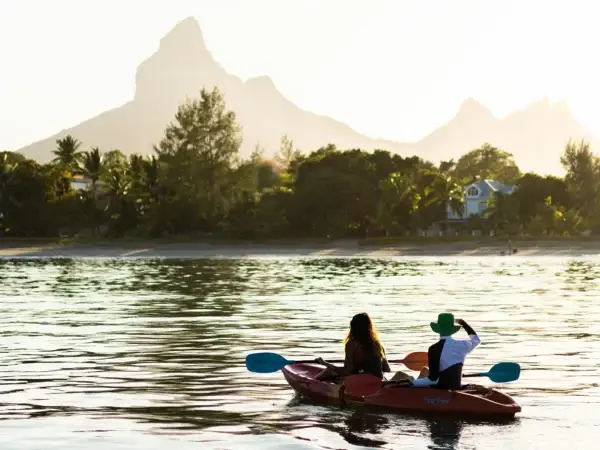
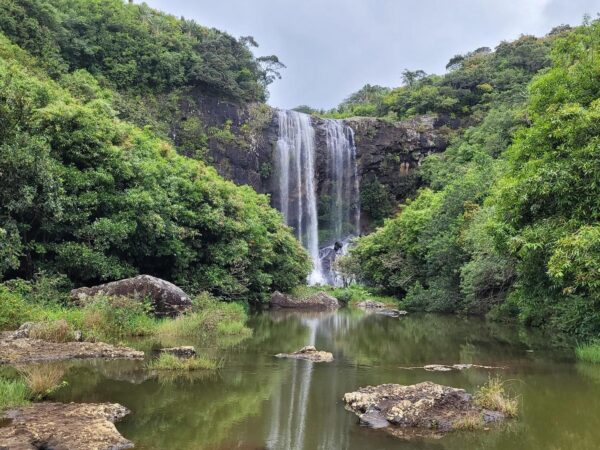
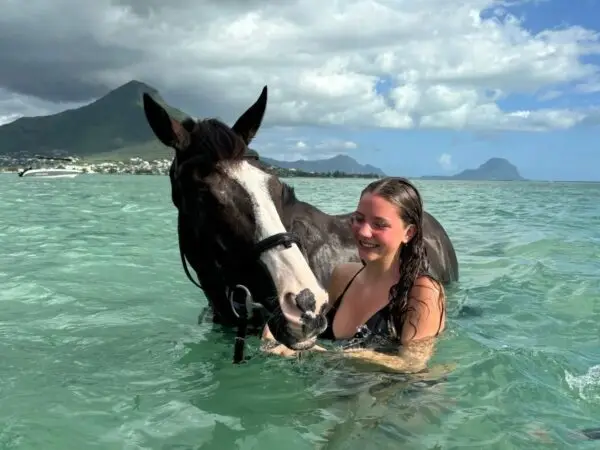
Swimming with your horse in the lagoon, kayaking up the Tamarin River or hiking to the pools of Tamarind Falls (the 7 Cascades).
-
 Mangrove and pools
Kayaking on the Tamarin River (2.5 hours)
Paddle up the Tamarin River between mangrove and mountains, as far as the freshwater pools.
€35.00 -
The classic
Tamarind Falls hike (3 hours)
The island’s best-known hike, to Tamarind Falls, in a small group, with a swim in the natural pools.
€39.00 -
From age 6
Swimming with horses at Flic en Flac (1 hour)
A horseback ride along Flic en Flac beach, then a swim with your horse in the lagoon, from age 6.
€90.00 / 3 hours

Agnès
Traveling between May and November? Let’s go see the turtles
Found a spot? We need your dates, the number of swimmers and the children’s ages: send them on WhatsApp. We’ll book the outing, or a visit to La Vanille Nature Park to see the giant tortoises.
FAQ: sea turtles in Mauritius
The best-known areas are Blue Bay, Trou aux Biches, Pereybere, Flic en Flac, Le Morne and some trips to Gabriel Island. For giant tortoises, head to La Vanille Nature Park in the south. The right choice depends mostly on where you’re staying and the state of the sea on the day.
Not on purpose. Swimming with sea turtles is banned in Mauritian waters, but you sometimes see one during a snorkeling session, mostly in calm lagoons and near some reefs. Keep your distance, don’t chase them and never try to make contact. A good encounter stays discreet and short.
At sea, the two species most often mentioned are the green turtle and the hawksbill turtle. On land, the Aldabra tortoise can be seen in parks like La Vanille Nature Park. So it’s marine wildlife on one side and giant land tortoises on the other.
The easiest place is La Vanille Nature Park, in the south of the island. You see Aldabra tortoises in a setting built for visitors. It’s a good option when you’re traveling with kids or when conditions at sea are so-so.
Blue Bay often comes first thanks to its marine park, fairly easy access and the quality of the snorkeling when conditions are good. Trou aux Biches also works very well for an easy entry into the water. There’s no guarantee, but these areas offer real chances.
Yes, avoid it completely. Touching, feeding or blocking a turtle disturbs its behavior and stresses it. Good practice is to watch calmly, without contact, always leaving the animal enough room to get away.
The best period runs from May to November, in the dry season. The water is often clearer, rain is rarer and outings are more comfortable. Mornings are usually best, with a calmer sea.
To see giant tortoises, La Vanille Nature Park is the best-known and easiest park to reach. For sea turtles, it isn’t a classic wildlife park, but Blue Bay Marine Park offers a protected setting suited to watching them. The two visits suit very different interests.