Mauritius independence: the history of March 12, 1968
The independence of Mauritius marks the birth of Mauritius as a sovereign country, proclaimed on March 12, 1968. Mauritius independence day, March 12, is still the national day. Between colonial legacy, political debates, the Mauritian flag and the national holiday, this guide puts the milestones in order. Knowing this history changes how you see Port Louis and its memorials.
Visiting Port Louis in the footsteps of independence
We organize visits of Port Louis and excursions that bring this chapter of history to life. Tell us your dates and interests on WhatsApp.

The origins of the movement for Mauritian self-rule
The movement toward Mauritian self-rule was born on an island shaped by the colonial order, then by British administration. Over the 20th century, demands for representation, social rights and political participation grew.
Independence didn’t come all at once. It grew out of a long road of reforms, tensions between communities and the growth of a shared identity. In 1968, Mauritius became an independent state within the Commonwealth, before later becoming the Republic of Mauritius.
Mauritius independence at a glance
Here are the essentials to keep in mind:
- 📅 Mauritius became independent on March 12, 1968.
- 🏛️ The transition came after decisive elections in 1967.
- 👤 Sir Seewoosagur Ramgoolam played a central role.
- 🚩 The Mauritian flag was raised at the official proclamation.
- 🌍 The country remained in the Commonwealth after independence.
The political road to Mauritian sovereignty
Before 1968, the history of Mauritius spans several colonial periods, including the British period starting in 1810. Under British colonization, the island developed a strongly sugar-based economy, rigid social hierarchies and political representation that stayed limited for a long time. This historical context explains why the question of self-rule took time.
Little by little, institutional reforms opened up political space. Parties organized, unions gained weight and the population demanded a bigger place in decision-making. The debate wasn’t only about breaking with the United Kingdom. It also touched on how communities live together, economic power and defining a shared future.
The road to sovereignty was anything but smooth. It moved forward through negotiations, compromises and tensions. That’s also what makes the subject fascinating for a traveler. You quickly see that independence didn’t happen overnight; it was built step by step, in a country already tied to the Commonwealth and very aware of its fragility.


Agnès’s tip
If you like history, take the time to trace the colonial periods of Mauritius before 1968. It helps explain why independence felt like such a major turning point. Reading events in order, you’ll better see how the island’s political and social balances were built.
The main steps toward the independence of Mauritius in 1968

To understand how Mauritius became independent, you have to go back well before 1968. Slavery deeply structured colonial society until its abolition in the British Empire in 1835. After that, Indian indentured labor permanently transformed the country’s demographics, economy and culture. This Indian immigration still shapes the history of Mauritius in its languages, religions and political balances.
Here are the main dates leading to independence, then to the republic:
| Date | Event |
|---|---|
| 1598 | Dutch landing; they give the island the name Mauritius |
| 1715 | French takeover: the island becomes Isle de France |
| 1810 | British conquest; the island takes the name Mauritius again |
| 1834-1835 | Abolition of slavery and arrival of the first Indian indentured workers |
| 1965 | Separation of the Chagos Archipelago |
| 1967 | Decisive elections in favor of independence |
| March 12, 1968 | Proclamation of independence |
| March 12, 1992 | Mauritius becomes a republic within the Commonwealth |
Over time, Port Louis established itself as the administrative and political center, while Rodrigues remains linked to Mauritius as a whole, with its own island realities. The decline of some economic sectors, social inequalities and debates over representation fueled the political demands of the 20th century.
1967: the decisive vote and the political deal-making
The year 1967 was decisive. The 1967 elections served almost as a political referendum on the country’s future. The camp in favor of independence, led by Sir Seewoosagur Ramgoolam and the Mauritian Labour Party with its allies, won out over forces more wary of a quick break with the United Kingdom.
Beforehand, the Lancaster House Conference talks in London played a major role. These negotiations set the terms for reaching independence and fixed the future constitutional framework. The process remained political, technical and sometimes very tense. Nothing was settled in advance.
People often reduce this moment to a simple election date. In reality, the vote opened a sequence mixing party strategy, social worries and diplomatic calculations. Sir Seewoosagur Ramgoolam then emerged as the figure most associated with this transition. Without being alone, he became the face of a historic shift involving all of Mauritius.

March 12, 1968: the official proclamation in Mauritius
March 12, 1968 is the date of Mauritian independence. On that day, in Port Louis, the British colony became a sovereign state. The official ceremony gave public form to a change prepared for months and debated for much longer. This is the date that the national day marks today.
Sir Seewoosagur Ramgoolam, who became Prime Minister, embodied this new stage. Mauritius was not yet a republic at that point. The country became independent while keeping the British monarch as symbolic head of state within the Commonwealth. This nuance matters, because many people still confuse independence and republic.
On the ground, the significance of March 12 goes beyond the ceremony alone. The Mauritian flag replaced the colonial emblem, and the event entered collective memory. When you visit Port Louis, this past is never far away. Between official buildings, public squares and monuments, the city keeps the trace of the day that marked a turning point for the country’s sovereignty.

The 1968 riots and territorial questions around the archipelago
Independence didn’t arrive in a calm climate. The 1968 riots are a reminder of how fragile the moment was, against a backdrop of tension between communities and political fears. This violence left its mark and weighed on national memory for a long time. It also shows that entering sovereignty didn’t settle everything at once.
Disputes opened by 1968:
- 1968 riots: tension between communities just before independence
- Chagos separation: a contested separation orchestrated by the United Kingdom
- Rodrigues’s place: integration into Mauritius as a whole, regional autonomy later
- Rise of the MMM: Mauritian Militant Movement, a new political force after independence
At the same time, the Chagos question remains one of the most sensitive issues of this period. The archipelago was separated from Mauritius by the United Kingdom before independence, in a strategic context tied to the British and American military presence. This matter remains central in the Mauritian reading of decolonization. Rodrigues, for its part, remains part of Mauritius as a whole.


Independence or republic: what changed in Mauritius’s status
Many travelers mix up the two dates. In 1968, Mauritius gained its independence. In 1992, the country became the Republic of Mauritius. Sovereignty already existed between the two dates. What changed was the institutional form, so they are not the same event.
From March 12, 1968, Mauritius ran its own affairs as an independent state. The country remained a member of the Commonwealth, which doesn’t prevent political autonomy. The head of state was then the British monarch, represented locally. In 1992, that symbolic link disappeared and Mauritius adopted a president as head of state. The Mauritian rupee, the currency of the archipelago, was introduced much earlier, in 1877.


Mauritius national symbols: March 12 and the flag
Every March 12, Mauritius celebrates its national day. This date recalls the independence proclaimed in 1968, then the republic established on the same calendar day in 1992. It’s a powerful occasion: civic, symbolic and popular all at once. For a visitor, it’s a good chance to sense how Mauritians relate to their history.
The Mauritian flag has a central place in this national celebration. Its four bands, red, blue, yellow and green, are commonly read as symbols. They stand for struggle and energy, the Indian Ocean, the light of a new future and the island’s land. As with most symbols, their meaning also comes from how people use them. The celebration belongs to a shared history, whatever one’s origins.

Historic sites of Mauritius to visit today
Mauritian history can be visited on the ground too. Several sites tell the story of colonization, slavery and indentured labor. Here are some historic places to visit:
- Aapravasi Ghat, in Port Louis: A UNESCO World Heritage site since 2006, this former immigration depot received hundreds of thousands of Indian indentured workers starting in 1834. It is a major place of memory for the diaspora.
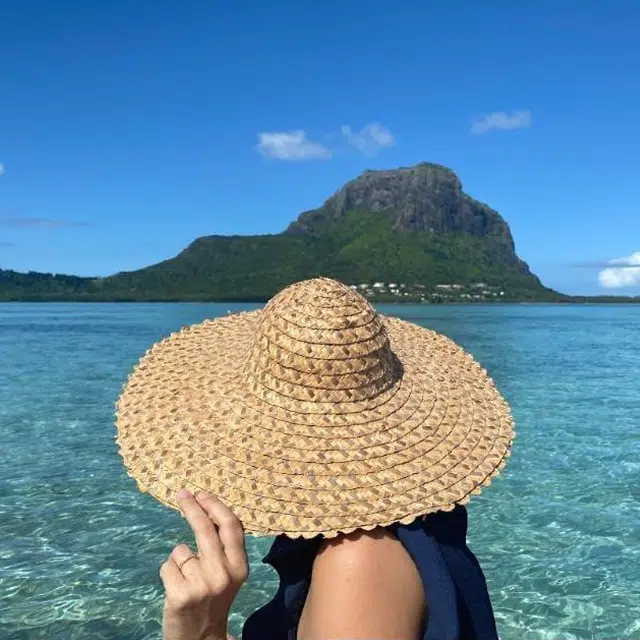
- Le Morne Brabant, in the southwest: Listed by UNESCO in 2008, this emblematic mountain served as a refuge for escaped slaves. It has become the symbol of resistance to slavery.
- Fort Adelaide (La Citadelle), in Port Louis: This 19th-century British fortress overlooks the capital and offers a fine view of the city and the harbor.
- The Mahébourg museum, in the southeast: Housed in a former colonial mansion, it traces the naval and local history of the island.
How to take part in Mauritius independence day
Attending the March 12 celebrations is fairly simple for a traveler, as long as you aim for the right places and plan your getting around a little.
🎟️ Can tourists join in?
Yes, a tourist can attend the public celebrations of the national day in Mauritius. The most formal official ceremonies sometimes have restricted areas, but you can feel the atmosphere in public spaces, especially in Port Louis and in several towns across the island.
📍 Where to go?
Port Louis is the most obvious reference point, since the capital hosts some of the ceremonies, flag-raisings and official tributes. You can also take in the atmosphere in town centers, near public buildings, schools and some memorials.
- Port Louis for the historic setting
- Public squares for the local atmosphere
- Rodrigues also marks the date, on its own scale
⏰ What time of day is best?
It’s better to come in the morning, since many of the symbolic moments take place early in the day. In practice, arriving before 9 AM often lets you find a spot without a rush and get ahead of road closures around the official areas.
⏱️ How long should you plan for?
Plan on between one hour and half a day depending on your curiosity. If you want to see a ceremony, walk around the historic center and then visit a memorial site, half a day is about right. To simply get a feel for the atmosphere, an hour or two is enough.
🎒 What to plan for and bring
In March, the heat and humidity are felt fairly quickly. Bring water, sun protection, a hat and comfortable shoes. Wearing the flag’s colors goes over well, though it isn’t required.
- A water bottle
- A hat and sunscreen
- A charged phone for photos and traffic info

Three activities to see the island
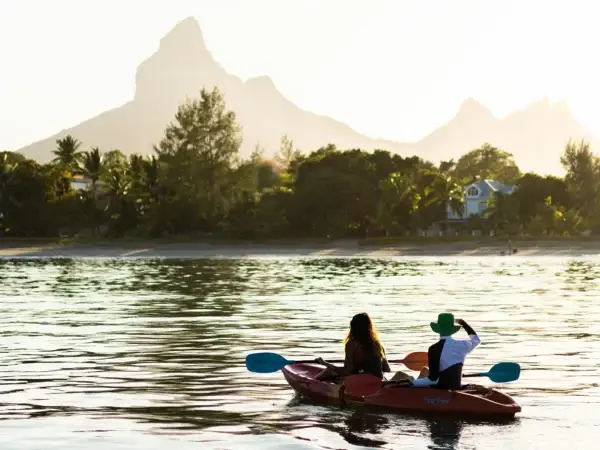
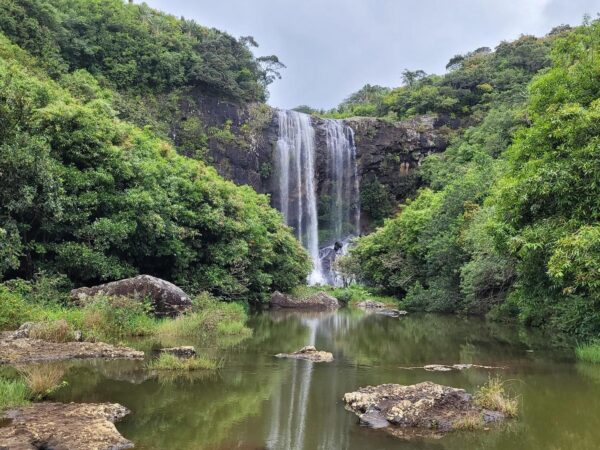
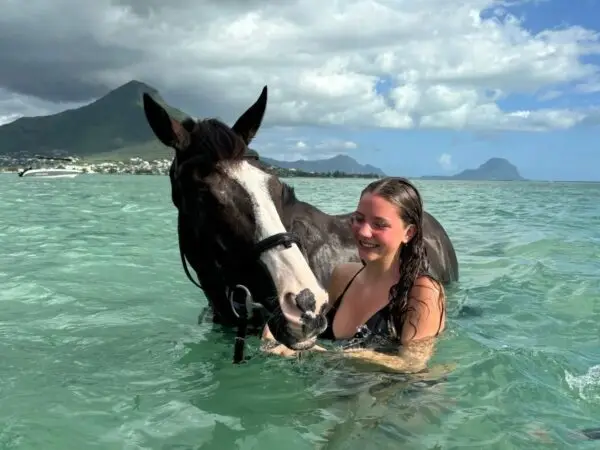
Between two visits, hike the Tamarind Falls (the 7 Cascades), paddle the Tamarin River or swim with horses in Flic en Flac.
-
 Mangrove and pools
Kayaking on the Tamarin River (2.5 hours)
Paddle up the Tamarin River between mangrove and mountains, as far as the freshwater pools.
€35.00 -
The classic
Tamarind Falls hike (3 hours)
The island’s best-known hike, to Tamarind Falls, in a small group, with a swim in the natural pools.
€39.00 -
From age 6
Swimming with horses at Flic en Flac (1 hour)
A horseback ride along Flic en Flac beach, then a swim with your horse in the lagoon, from age 6.
€90.00 / 3 hours

Agnès
Is your stay during the national day? Tell us
Share your dates on WhatsApp: we’ll adjust your itinerary, transfers and Port Louis visit if your stay overlaps with the national day celebrations.
FAQ on Mauritian independence
Mauritius gained its independence on March 12, 1968. That date became the national day, because it marks the end of British colonial rule and the country’s entry into sovereignty.
The figure most associated with independence is Sir Seewoosagur Ramgoolam. With the Mauritian Labour Party and its allies, he carried the political negotiations that led to the change of status in 1968.
Mauritius became independent from the United Kingdom. The island had been a British colony since 1810, after the takeover of the former Isle de France, previously controlled by France.
The Chagos were separated from Mauritius before independence by the United Kingdom for strategic and military reasons. This separation, strongly contested by Mauritius, remains a major diplomatic issue in the history of decolonization.
Mauritius has been a republic since 1992, while remaining a member of the Commonwealth. So it is not a realm, but it keeps this voluntary tie with an organization that grew out of the former British world. La Francophonie, the organization of French-speaking countries, is another of its main diplomatic forums.
The 1968 independence ended British colonial rule and gave Mauritius its sovereignty. The republic, proclaimed in 1992, mainly changes the institutional form of the head of state, without ending Commonwealth membership.
The 1968 riots were violence between communities that broke out in a very tense political and social climate. They left their mark just as the country was gaining independence, and the memory remains sensitive.
Rodrigues was part of Mauritius as a whole during the independence process and took part in the shared political framework. The island stayed linked to Mauritius after 1968, then developed a more pronounced regional autonomy.