Is Mauritius safe? The risks to know before you go
Is Mauritius safe? Overall, yes: it’s a generally safe destination for travelers, but that doesn’t mean there is no risk. France’s foreign ministry (France Diplomatie) rates the whole country “normal vigilance,” while noting a rise in assaults since 2025. The most concrete risks are the sea and its currents, the roads, tropical weather, theft and some trips at night.
In this article, we explain what really deserves your attention, where to be extra careful and what to sort out before you leave. The goal isn’t to scare you. It’s to help you enjoy the lagoons, the excursions and getting around the island with confidence.
Travel with peace of mind, backed by a team based in Mauritius
We arrange your airport transfers and excursions with local operators. Tell us your dates and who’s traveling (a couple, a family or solo) on WhatsApp, and we’ll tailor our advice.
Mauritius safety at a glance
- 🛡️ France Diplomatie puts the whole country at normal vigilance, while noting an increase in assaults since 2025.
- 🏊 Ocean currents regularly claim victims: never swim in a prohibited area.
- 🌪️ Cyclone season runs from November to mid-May, with the highest risk between January and March.
- 🌊 In January 2024, Cyclone Belal passed about 100 km (60 miles) off the island’s south coast.
Is Mauritius safe? The short answer

Mauritius is not a dangerous destination, and there’s no reason to cancel a trip. Tourism is well established, English and French are both widely spoken, and visitors can get around the whole island with ordinary precautions.
The risks to watch fall mainly into three areas: carelessness at sea or on the road, weather during the southern-hemisphere summer, and theft in crowded places.
The country has been independent since March 12, 1968, and a republic since 1992. That stability doesn’t mean you can stop keeping an eye on your belongings, especially in hotel rooms, on public beaches and near ATMs.
The real risks to know about in Mauritius

The risks in Mauritius are well known and can be largely limited with a few practical decisions before and during your trip. Incidents mostly involve personal belongings, nighttime travel and the weather hazards of a tropical island. The table below summarizes the most common situations.
Risk | What to know | What to do |
|---|---|---|
Swimming and currents | Strong ocean currents regularly cause drownings, according to France Diplomatie | Obey no-swimming signs and check the weather forecasts. |
Pickpocketing | Markets, public beaches and tourist areas of Grand Baie or Flic en Flac | Keep your phone, cash and documents out of sight. |
Theft at your accommodation | Hotel rooms, especially when belongings are left within reach | Use the safe when there is one, and don’t leave your documents in an open bag. |
Theft near ATMs | ATMs on the street or right next to it | Withdraw a limited amount and put it away before you walk off. |
Late nights out | Port Louis, Flic en Flac and Grand Baie, especially after dark | Plan on a taxi back rather than walking alone. |
Weather hazards | Cyclone season from November to mid-May, heavy rain possible | Adjust boat trips and hikes to the announced conditions. |
Assaults remain rare, but France Diplomatie reports an increase since 2025, with incidents that are sometimes violent and affect Mauritians and visitors alike. They don’t reflect a typical stay. Staying in accommodation registered with the Tourism Authority and using arranged transfers helps you avoid risky situations.
JC’s tip
From what I see on the ground, travelers most often go for a swim and leave their bag sitting on the sand behind them. At Mont Choisy or Flic en Flac, take only what you need and leave the rest at your accommodation.
Areas and situations to watch in Mauritius

Swimming, currents and lagoons
Swimming in Mauritius is generally pleasant in the protected lagoons, but conditions change with the coast, the swell and the depth. Mont Choisy, Trou aux Biches, Belle Mare and Le Morne don’t have the same sea on the same day: watch the waves, the color of the water and the other swimmers before you get in.
France’s foreign ministry reminds travelers that powerful ocean currents regularly cause drownings in Mauritius. Obey the no-swimming signs, even when the sea looks inviting, and check the weather forecasts before any outing at sea.
Dead coral can cut your feet, and some shallow lagoons are better for wading than swimming. Wear water shoes when the bottom is rocky or coral, and stay out when the sea looks rough.
Roads, parking and nighttime outings
Driving is on the left, and the road network is generally decent but poorly signed and poorly lit in places. Pedestrians, cyclists and stray animals can appear on the road, and some drivers get behind the wheel after drinking despite the zero-tolerance rule. Getting around takes extra attention, especially after dark.
- Take a taxi home from Port Louis, Grand Baie or Flic en Flac late in the evening.
- Don’t leave bags or devices visible in a vehicle parked near a public beach.
- A helmet is mandatory on a moped.
- Check that your home driver’s license is accepted for a tourist stay. On a scooter, stay visible and avoid driving at night.
- Choose a busy parking lot when you stop for dinner or a swim.
Isolated beaches, rain and poor visibility
The risk rises mainly when you combine isolation, bad weather and a late hour. A quiet beach can be very pleasant in the middle of the afternoon with a calm sea, but it becomes less suitable when a heavy downpour cuts visibility or the swell builds.
On the wild south coast, around Souillac and Gris Gris, watch the sea from the shore rather than getting close to exposed areas. The scenery is spectacular, but these are not sheltered lagoons.
Drugs, alcohol and local penalties
Mauritius has zero tolerance for narcotics: possession and use are strictly prohibited, and importing them, even in small amounts, can bring very heavy prison sentences. Checks at the airport are systematic. Never agree to carry a package, bag or substance for someone else, and don’t drive after drinking: zero tolerance applies behind the wheel too.
A trouble-free stay comes down to practical choices: a ride home arranged in advance, a charged phone and accommodation you can easily identify when you leave a restaurant or beach in the evening.
Mauritius safety tips by type of traveler

Couples and honeymoons
Couples can enjoy the beaches, restaurants and excursions without changing their whole plan, but it’s best to avoid isolated walks after dark. In the busy areas of Grand Baie or Flic en Flac, simply plan on a taxi back rather than walking to your hotel.
For a day at sea from the west coast, bring sun protection, water, a charged phone and a waterproof pouch for your personal items. Most open-water departures leave from this coast.
Families with children
Families are often more at ease in the protected lagoons, as long as you pick a beach suited to your children’s ages and never let up your supervision in the water.
- Prefer the sheltered lagoons of Trou aux Biches, Mont Choisy or Belle Mare when the sea is calm.
- Avoid long outings in the middle of the day, since the heat calls for regular breaks in the shade.
- Keep dry clothes, water and sunscreen in the car for the drives.
- Choose an activity whose length suits your children’s ages, rather than an overloaded schedule.
Solo women and independent travelers
Solo women travelers and independent travelers can travel in Mauritius without any particular risk, by choosing well-identified accommodation and arranging their evening trips back. Avoid walking alone after dark, especially in less busy areas.
To get around freely, keep your hotel’s contact details, your planned route and a way to get back. The lively north around Grand Baie suits people who want restaurants and services nearby, while the west, around Flic en Flac and Tamarin, works well for a stay that mixes beach and excursions.
Traveling independently doesn’t have to mean improvising. Check the times of your transport, tell your accommodation if you’ll be back late, and keep your documents separate from your cash.
Mosquitoes, illness and insurance in Mauritius

Mosquitoes and tropical diseases
As for mosquitoes, France Diplomatie’s health sheet reports that dengue, chikungunya and Zika are present in Mauritius. The island is, however, free of malaria, and no vaccination is mandatory, except for yellow fever if you’ve recently been in an affected region. Measles cases have also been reported, so make sure your routine vaccinations are up to date. Because health recommendations change, check the latest official information before you leave.
Protect yourself especially toward the end of the day with clothes that cover your skin, repellent and a mosquito net if your accommodation isn’t fully enclosed. See a doctor promptly if you have a fever, unusual pain, intense fatigue or a rash.
What travel insurance to look for
Travel insurance should cover medical care, hospitalization, phone assistance and repatriation. Also read the deductible amount and the exclusions for water activities, vehicle rental or preexisting health conditions. Here are the coverages to check before you sign your policy.
Coverage to check | Real-life situation | What to check |
|---|---|---|
Medical care and hospitalization | Fever picked up during a stay in Grand Baie | Medical coverage and how advance payment of costs works. |
Assistance and repatriation | Accident on the road between Flic en Flac and Tamarin | An assistance number you can reach, and the conditions for transport. |
Leisure activities | Snorkeling outing in the Belle Mare lagoon | Coverage of the water activities planned in your policy. |
Prevention budget
Prices for repellent, first aid kits and insurance vary with where you buy, how long you stay and the level of coverage. At a pharmacy or supermarket, compare repellent sizes before buying for the whole trip.
- Pack a suitable repellent and sunscreen before your excursions.
- Add bandages, an antiseptic and your personal medications to your kit.
- Check the deductible, the medical care limits and repatriation before you buy insurance.
Mauritius safety tips before you go
- ✓Book accommodation with suitable security measures and keep your valuables in the safe.
- ✓Keep a copy of your documents separate from the originals.
- ✓Plan around market hours: the Port Louis Central Market is open from 5:00 AM to 4:30 PM Monday through Saturday, and until 1:00 PM on Sunday.
- ✓Plan your walks and visits for the morning, when the heat is easier to take.
- ✓Confirm the weather before a hike, a boat trip or a day on the wild south coast.
Cyclones, heavy rain and rough seas

The natural hazards in Mauritius are mostly cyclones, heavy rain, swell and fast-changing sea conditions. The southern-hemisphere summer, from November to April, is hot and humid, with an official cyclone season from November to mid-May and extra vigilance between January and March.
In January 2024, Cyclone Belal passed about 100 km (60 miles) off the island’s south coast without hitting it directly. A cyclone episode doesn’t mean your whole trip is ruined, but boat trips, hikes and some transfers may be postponed or canceled.
In December, intense heat and humidity come with possible short showers in the late afternoon. So save Port Louis visits, markets and walks for the morning, then plan a break or an indoor activity when the sky clouds over.
The southern winter, from May to October, is drier and often brings a calmer sea. This period suits travelers who want to see turtles in calm lagoons or schedule boat trips without the peak heat.
The weather should also guide your choice of coast. The north and west offer lagoons popular for swimming, while the wild south, around Gris Gris, exposes the coast more to waves. For hikes, combine Le Morne, Chamarel and the Black River Gorges in one day only when conditions are favorable.
Going with a guide is simpler
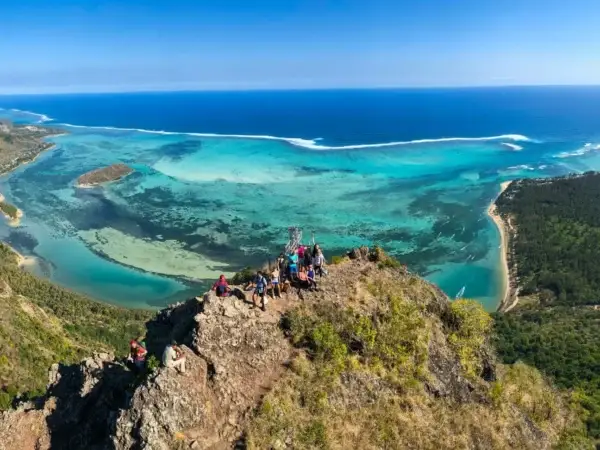
Le Morne Brabant with a certified guide, the Tourelle de Tamarin for experienced hikers, or a visit to the Chamarel Rum Distillery.
-
 360° view
Panoramic hike up the Tourelle de Tamarin (3 hours)
One of the finest 360° views on the island, from the top of the Tourelle de Tamarin: a demanding climb for experienced walkers.
€49.00 -
Tasting
Tour and rum tasting at the Chamarel Rum Distillery
One hour to see how Chamarel’s agricole rum is made, from cane to bottle, tasting included.
€15.00 -
UNESCO summit
Le Morne Brabant hike (4 hours)
The climb up Le Morne Brabant, a UNESCO site, to the summit and its view over the southwest lagoon, with a certified guide.
€45.00


Agnès
Safety question before you go? Ask the team
Agnès and JC, who run the agency, answer your questions on WhatsApp about swimming, driving at night or areas to watch. Give them your dates and your route.
Mauritius safety FAQ
The main downsides are opportunistic theft in tourist spots, the humid heat of the southern-hemisphere summer and lagoons that are sometimes shallow. Some beaches also have coral bottoms that can make walking barefoot uncomfortable.
The coast and the season you pick change the trip a lot. A stay in Belle Mare, Grand Baie, Flic en Flac or the wild south doesn’t meet the same expectations.
No area of the island is currently advised against for travelers as a whole, but some situations call for more vigilance: authorities in particular recommend avoiding isolated beaches, parks and areas after dark. Port Louis, Grand Baie and Flic en Flac deserve more attention in the evening, especially for walks back on foot.
Also avoid isolated beaches when the sea is rough, exposed coastal areas during heavy rain, and spots with no other swimmers when you don’t know local conditions.
The north around Grand Baie suits a lively stay, with many restaurants and services nearby. The west coast, around Flic en Flac and Tamarin, attracts families and travelers who want to combine lagoon, sunsets and boat departures.
The east, toward Belle Mare and Trou d’Eau Douce, suits resort stays and postcard beaches better. The wild south, around Souillac and Gris Gris, is for people who want more rugged scenery, but not daily swimming in a protected lagoon.
The most real dangers are theft of bags or items left unattended, mosquitoes, accidents linked to rough seas and weather disruptions during cyclone season. Watch for stonefish when diving or on rocky bottoms.
Some fish can carry ciguatera, also called “gratte.” Avoid eating fish when you don’t know its origin or how it was prepared, especially outside a reliable restaurant setting.
For most travelers, official recommendations don’t advise against a stay: the whole country is rated normal vigilance by France Diplomatie. A worried traveler can enjoy the island with confidence by choosing reputable accommodation, planning trips ahead and avoiding isolated walks after dark.
A stay built around a hotel, busy beaches and arranged transfers works better than a completely improvised plan. That way you enjoy the island without exposing yourself unnecessarily.
There is a risk of theft, particularly in markets, on public beaches, in hotel rooms and near ATMs. It drops sharply when you don’t leave valuables in view and withdraw cash discreetly.
For purchases, compare prices before paying and ask for the taxi fare before you set off. The most awkward situations often come from a lack of planning rather than widespread insecurity.