Mauritian séga: understanding the music and experiencing it in Mauritius
Sega music in Mauritius is both a traditional music and a dance born on the island, with roots across the Indian Ocean. This guide explains what sega expresses, what you actually hear when you listen, and how to see it live during a stay on the island.
Hear sega live, played on the ravanne
To see sega danced during your stay, message us on WhatsApp with your dates and where you are staying: we help you find a sega evening near your hotel.
What exactly is Mauritian sega?
Mauritian sega is a music genre and a traditional dance from Mauritius. It is a music of memory and celebration, with lyrics often in Mauritian Creole. Born, according to UNESCO, from the songs of enslaved people of African and Malagasy origin, sega later opened up to more modern sounds, and some tracks recall salsa or calypso.
Sega remains an important part of Mauritian cultural identity, and you can still see it at festivals, parties and concerts. To spot it quickly, listen for a chorus sung in Creole, a steady pulse and a dance close to the ground. That is usually the most direct way to identify it.
Mauritian sega at a glance
- 🎶 Typical Mauritian sega has been on UNESCO’s intangible cultural heritage list since 2014, and Rodrigues sega tambour since 2017.
- 🥁 The ravanne, the maravanne and the triangle make up the most recognizable trio of sounds.
- 💃 The dance is done by sliding the feet without lifting them off the ground.
- 🌍 The genre was born from African and Malagasy roots, with modern touches close to salsa and calypso.
- 🏝️ Sega is still a big part of festivals, parties and concerts in Mauritius.
How do you recognize Mauritian sega when you listen?

You recognize sega first by its movement, then by the instruments that carry it. In the dance, the feet slide along the floor without lifting while the body turns and sways. What you hear first is the pulse, the rhythmic rasp and the dry strikes.
| Detail | What you hear or see |
|---|---|
| Mauritian sega | Feet sliding on the floor, swaying hips and a continuous pulse. |
| Maravanne | A rasping, rattling sound, made by seeds shaken inside a frame of sugar cane stalks. |
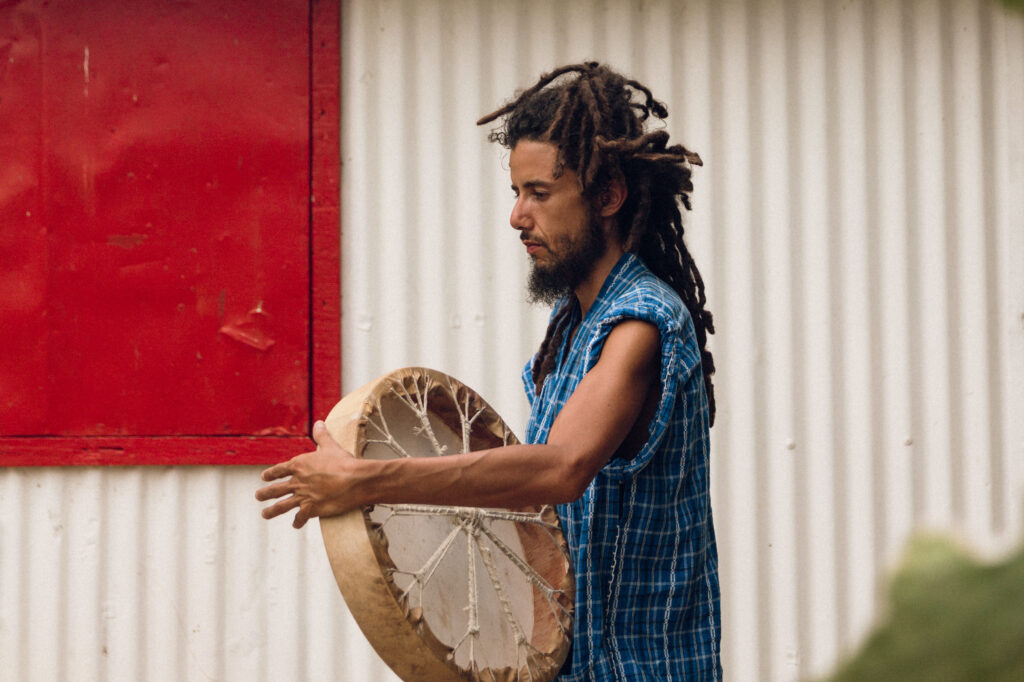
| Ravanne | A round, deep sound, from a wooden drum covered with a stretched goatskin. |
| Triangle | A bright metallic note, heard throughout a sega. |
The ravanne sets the rhythmic base, the maravanne adds the grain, and the triangle cuts through the flow with bright hits. The dancer’s body follows this pulse with no jumps or foot stomps. If you remember only one clue, make it the continuous glide, very different from dances with lifted steps.
Where do its Indian Ocean roots come from?
Influences from across the Indian Ocean
Mauritian sega has its roots in the songs of the African and Malagasy peoples who arrived on the island, and cousin forms of sega also exist in the Seychelles and on Réunion. This exchange across the Indian Ocean explains its distinct identity, even though you can also hear echoes of other Caribbean and Latin American music. The result is still very Mauritian in its movement and in the way it is sung.
What has changed over time
Over time, sega has not stayed confined to a purely local form. It has spread, traveled more and become a recognized cultural marker well beyond the island.
Why the 2014 listing matters
In 2014, typical Mauritian sega joined the representative list of UNESCO’s intangible cultural heritage. This listing confirms its cultural weight and helps it be seen as a living practice, not just a backdrop for a show. For Mauritius, it is also a clear sign that the tradition is being passed on.
The instruments that carry the rhythm

The ravanne, the heart of the sound
The ravanne is a wooden frame drum, traditionally made from Chinese guava wood, with a stretched goatskin. It carries the rhythmic base of sega and immediately gives the sense of a round, warm pulse. It is often the first thing you hear, even without seeing the musicians.
The maravanne and the triangle
The maravanne and the triangle add two very different sounds to the ravanne.
- The maravanne gives a dry, almost grainy rasp that supports the movement.
- The triangle adds a clear metallic ring, very easy to pick out in the mix.
Their role is not to cover the voice, but to let it breathe and keep the rhythmic frame.
What to take away from a first listen
On a first listen, remember three things: a steady beat, a percussive grain, and a feeling of dancing close to the ground. If the track makes you want to move without trying to count the beat, you are already in the right spirit. You recognize sega more by its drive than by technique.
Dance, lyrics and emotions in Mauritian sega

The sega dance is built on swaying hips and feet that slide along the floor. The lyrics often speak of love, joy, sadness, everyday life and the struggles of the people. This mix of movement and words connects right away, even the first time you hear a sega.
Sega is also part of evenings, parties and hotel shows when the entertainment is done well. When we point you to an evening or an excursion, we look for this kind of setting where the music stays alive rather than turning into a decorative act.
The artists who shaped sega
Two names dominate the history of the genre: Ti Frère (Alphonse Ravaton), a founding figure of typical sega, and Serge Lebrasse, who popularized it from the 1950s. On today’s scene, Cassiya and Alain Ramanisum play the sega you are most likely to hear in the evening.
Sega has gained popularity internationally, so start by listening widely rather than following a single name. Look for versions where the voice in Mauritian Creole, the ravanne and the triangle move together, and you will better see what makes it so strong. The point is to recognize a way of singing and playing, as much as a specific artist.
JC’s tip
In the evening, arrive a little before the musicians take their places: you will see the dance and the exchanges with the audience better. I have seen travelers show up in the middle of a song and lose half of the rhythmic detail. If you can, stand near the dance area, because that is where sega takes its full shape.
Where to hear Mauritian sega during your stay
Sega is most often heard at festivals, local parties, concerts and certain hotel evenings. The north and the west have more nightlife and easier daily travel, which helps when you want a music evening without a lot of logistics.
The best settings are those where Mauritians really dance, not just where music plays in the background. Parties, concerts and some well-run tourist evenings give you the best chance of hearing live sega. Beaches and boat trips are not the main setting, though it can turn up there during special entertainment.
If you want an evening atmosphere, go for a festival date or a local party rather than improvised entertainment. In December, heat and humidity are strong, with brief showers possible in the late afternoon (2026 weather data), so leave yourself some buffer time. To skip the logistics, we can arrange your sega evening for you.
When to hear sega during your stay
- Sega comes up most naturally at parties and concerts.
- In December, there are more evenings in the north and the west.
- In the hot, humid season, the end of the day is still a good time for entertainment.
If you are staying only briefly, pick an evening where the music is announced in advance. A real local scene is better than a quick stop in a packed schedule.
Good habits for a good evening
At a sega evening, watch first, applaud, and join the dance when you are invited. A simple “Ki maniere?” (how are you?) often opens the conversation with Mauritians, who appreciate it when you try a few words of Creole. French and English are widely understood, so you can also just be yourself.
Daytime, before the sega evening
A hike in the wild south, the view from the Tamarin Tourelle or a private catamaran trip to the northern islands.
-
 Wild coast
Hiking the wild south (3 hours)
The cliffs of Gris Gris, basalt coastline and empty beaches: three hours on foot through the wildest part of the south.
€45.00 -
Private catamaran
Day trip to the 3 northern islands on a private catamaran
The catamaran all to yourselves, out to Coin de Mire, Flat Island and Gabriel Island: snorkeling, a barbecue on board and drinks.
€750.00 / day -
360° view
Panoramic hike up the Tourelle de Tamarin (3 hours)
One of the finest 360° views on the island, from the top of the Tourelle de Tamarin: a demanding climb for experienced walkers.
€49.00



Agnès
Plan your stay with Agnès and JC of Visiter Ile Maurice
Hotel, transfers, excursions and a sega evening if you like: we organize the whole stay. Message us on WhatsApp with your dates and the number of travelers to get a proposal.
FAQ about Mauritian sega
Mauritian sega is a traditional music and dance of Mauritius. It is recognized by its pulse, by instruments such as the ravanne and by lyrics often in Mauritian Creole.
Sega comes from Mauritius, while maloya comes from Réunion. Both share African roots, but sega relies on the ravanne, the maravanne and the triangle, with a Mauritian way of singing and dancing.
Mauritian sega has roots in the Indian Ocean and took shape from African and regional influences. Its 2014 listing as intangible cultural heritage shows that it is now recognized as a major Mauritian tradition.
For a first listen, look mainly for artists who let you hear the ravanne, the triangle and the lyrics in Mauritian Creole clearly. The best approach is to compare several sega performances, then keep the ones where the voice and the rhythm really speak to you.
Mauritian sega is a real living tradition, not just entertainment for visitors. It remains present at parties, concerts and cultural events, and its 2014 listing confirms that role.
Yes, because you pick up sega quickly through the body, the rhythm and the language. Even without a musical background, you can enjoy the dance, the percussion and the energy of the moment from the first listen.