8 top attractions in Mauritius
Mauritius packs major natural, cultural and seaside sights into a small island, from the lagoons to the sacred highlands. When you’re planning a first trip, it isn’t easy to sort through the beaches, hikes and landmarks. This list of the top attractions in Mauritius gets straight to the point, with Île aux Cerfs, Le Morne Brabant and Grand Bassin among the stops that set the tone for your trip right away.
For a full itinerary, see our guide to what to do in Mauritius.
First trip to Mauritius: which places should you choose?
Île aux Cerfs, Le Morne Brabant, Chamarel: it’s hard to fit everything into one stay. Tell us on WhatsApp how many days you’re staying and where you’re based, and we’ll help you sort it out.

How to choose the best places to visit for your stay
It all depends on your time on the island and your pace. With 4 to 5 days, focus on a few clustered places, such as Chamarel, the Seven Colored Earths and Black River Gorges National Park. That keeps drive time down and leaves room for real beach breaks.
With a week, add a cultural site and a boat trip. For a first trip, the smartest move is to mix nature, swimming and heritage. That way your schedule is neither too packed nor too slack.
Top attractions in Mauritius at a glance
For a quick overview, here are a few simple picks that cover the island well:
- 🌋 Trou aux Cerfs, to see an old crater easily
- 🏛️ Port Louis, for the market, the waterfront and the local atmosphere
- 🌳 Pamplemousses Botanical Garden, for a calm, shaded visit
- 🗺️ Sites that are fairly easy to link over 2 to 4 days
- 👨👩👧 A practical selection for a first trip or family outings
Top 8 places to visit in Mauritius
1. Île aux Cerfs, lagoon and water fun
On the east coast, Île aux Cerfs covers about 100 hectares (250 acres) and is a short boat ride away. People come for its clear beaches, water activities and a day that’s very easy to organize. It’s a good counterpoint to Blue Bay or Île aux Bénitiers, with a livelier format. For a 7-day stay, it’s an outing that checks a lot of boxes.
- Calm lagoon on the east coast, popular for swimming and water sports
- Easy access on a day excursion, often with an early departure
- A good beach stop if you’re already passing through Cap Malheureux or the southeast

Best season
October to April
Average duration
1 day
Effort level
Easy
2. Le Morne Brabant, a UNESCO-listed summit with coastal views
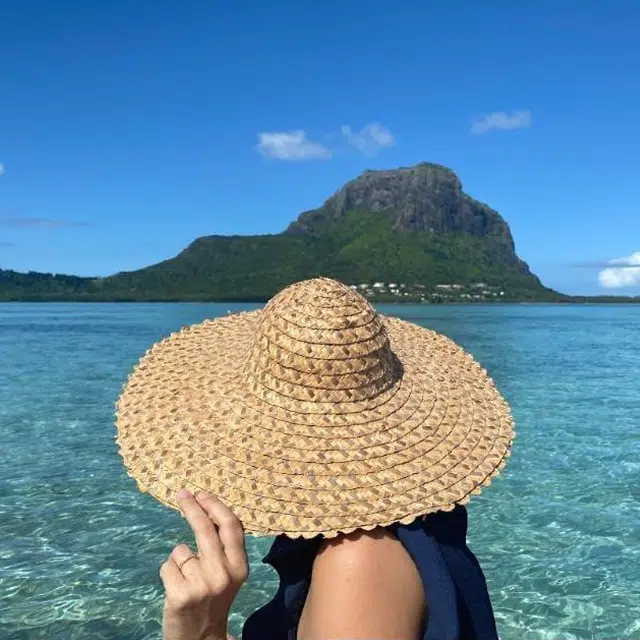
The Morne Brabant rises to about 556 meters (1,820 ft) in southwest Mauritius. A UNESCO World Heritage site, it matters as much for its history as for its scenery. The mountain overlooks a large, shallow lagoon and a beautiful stretch of coast. If you like to walk, the climb is worth the effort. And if you’d rather stay down below, the view from the peninsula is impressive enough.
- UNESCO-listed summit, tied to the history of slavery in Mauritius
- Wide views over the lagoon, the peninsula and the southwest
- Pair it with a day of beach, coastal road and Domaine de Bois Chéri

Best season
May to November
Average duration
3 to 4 hours
Effort level
Moderate
3. Chamarel, colored earths and waterfall
Chamarel packs several visits into one site, which explains its popularity with families. The park brings together the Seven Colored Earths dunes, two viewpoints over the waterfall, Aldabra tortoises and a coffee plantation. It’s easy to reach by car, with parking on site. Allow a solid half day if you like to walk, since the round trip to the dunes can reach 6 km (about 3.7 miles).
- Geological site with colored dunes, a waterfall and a panoramic café
- Ticket office on site, payment by card or in Mauritian rupees
- A very practical outing to pair with Tamarin or the Casela wildlife park

Best season
May to November
Average duration
3 to 4 hours
Effort level
Moderate
4. Black River Gorges National Park, trails and viewpoints
With more than 6,700 protected hectares (about 16,500 acres), Black River Gorges National Park is the island’s great green lung. You’ll find viewpoints reachable by car, but also real trails for walking several hours. Forests, mountains, waterfalls and endemic birds make up the landscape. It’s a very logical stop between Grand Bassin and Le Morne Brabant, especially if you want to break out of the beach-and-hotel routine a bit.
- The island’s largest protected natural area, at about 6,754 hectares
- Scenic roads and hikes of varying difficulty depending on the area
- Plan to go early in the morning if you’re heading on to Chamarel or Grand Bassin afterward

Best season
May to October
Average duration
2 to 5 hours
Effort level
Moderate
5. Sir Seewoosagur Ramgoolam Botanical Garden, plants and historic avenues
In Pamplemousses, this botanical garden founded in 1770 is among the oldest in the Southern Hemisphere. People come for the giant water lilies, the shaded avenues and the collections from several continents. The visit is a nice change from the coast, especially after a few days at the beach. For a first trip, it’s an easy stop in the north that doesn’t take a whole day.
- Historic garden created in the 18th century, near Port Louis
- A pleasant visit when the heat rises, thanks to the shaded areas
- A good cultural break between a beach in the north and a stop at Trou aux Cerfs

Best season
October to December
Average duration
1 to 2 hours
Effort level
Easy
6. Grand Bassin, sacred lake and spiritual atmosphere
Grand Bassin, also called Ganga Talao, is a crater lake in the central highlands. It is the most sacred Hindu site in Mauritius, with big crowds during Maha Shivaratri, between February and March. Outside the festival, the atmosphere stays peaceful and the setting is impressive. Dress modestly at the temples. It’s a memorable stop, very different from Port Louis, the Pamplemousses Botanical Garden or Flic en Flac.
- Volcanic lake linked to the great Hindu pilgrimage of Maha Shivaratri
- Respectful visit expected, with modest dress and discreet behavior
- Easy to combine with Chamarel or the Gorges park nearby

Best season
February to March for Maha Shivaratri
Average duration
1 to 2 hours
Effort level
Easy
7. Port Louis, Central Market and waterfront
Port Louis deserves more than a drive-through. The capital is easy to see in half a day, between the Central Market, the shopping streets and the Caudan waterfront. It’s a total change of pace from the beaches of Belle Mare or Trou aux Biches, and the place to feel the local rhythm. Go early, when the city is calmer and the heat is still bearable.
- A lively capital, easy to visit in a morning or half a day
- Central market for spices, fruit, snacks and crafts
- A good city break between two beach days or coastal drives

Best season
April to November
Average duration
3 to 4 hours
Effort level
Easy
8. Cap Malheureux, the red chapel and a peaceful bay
Up in the far north, Cap Malheureux is known for the Notre-Dame Auxiliatrice chapel and its red roof facing the sea. The setting is simple, calm and very photogenic, with a fine view of Coin de Mire. This stop combines easily with a drive to Gabriel Island or other beaches in the north. It’s more a short stop than a big visit, but it stays with you, and it’s a nice spot for a late-afternoon stroll.
- Iconic chapel of the north, easy to reach and quick to visit
- Open view of the bay and the islet of Coin de Mire
- Easy to pair with a boat trip or a nearby beach

Best season
October to December
Average duration
30 to 45 minutes
Effort level
Easy
The best beaches to alternate sightseeing and swimming
To balance your days, keep a beach that’s easy to reach after each big visit. After Chamarel or a drive in the west, Tamarin works well to end the day without much driving. On the east coast, Belle Mare remains a very good choice for a long swim after a boat excursion.
If you like varied moods, alternate a nature day and a lagoon day. It’s more pleasant than spending the whole trip in the car. Rodrigues also draws those who extend their trip, but for a week on the main island, it’s better to stay focused. Domaine de Bois Chéri can serve as a cool break in the highlands.

Tamarin and the west coast: surfing, dolphins and sunsets
On the west coast, the village of Tamarin keeps a relaxed mood, with surfing, dolphins and sunsets. It’s a stop of its own, wilder than the big beach resorts.
The island’s best surf spot
Tamarin has a reputation as the best surf spot in Mauritius. Its wild beach draws surfers with its powerful waves, especially from May to September. The mood stays authentic, far from the big hotel complexes. Even if you don’t surf, people come for the village’s bohemian atmosphere and the beauty of the bay at the foot of the mountains.
Swimming with dolphins
Tamarin Bay is one of the few places on the island where you can see dolphins in the wild. Outings go out early in the morning, when the sea is calm and sheltered from the wind. With a bit of luck, you’ll come across groups of 10 to 30 dolphins. Choose guided excursions that respect the animals and don’t chase them.
Salt pans and sunsets
Tamarin is home to historic salt pans, where salt has been harvested with traditional techniques since the 18th century. The harvest is best visited between September and December. In the evening, the bay’s due-west position gives blazing sunsets over the ocean, between 5:30 PM and 6:30 PM depending on the season.
Around the island: which sites to group into one day
The most efficient approach is to build an itinerary by area. In the southwest, group Le Morne, Chamarel and Black River Gorges National Park. That limits backtracking and leaves time for a relaxed lunch. If you’re traveling with children, adding Casela on the same day can become too ambitious.
In the north, pair Port Louis, the Pamplemousses Botanical Garden and Cap Malheureux over two separate days. The east coast suits an Île aux Cerfs and Belle Mare duo. Trying to do it all in one go is the best way to rush through the best stops.

Practical tips for planning your trips between sites
The island is fairly easy to get around, but drive times are often longer than you’d expect. A car rental is still the most flexible option, especially for linking Grand Bassin, Chamarel and Black River Gorges National Park in the same area. Also keep in mind that driving is on the left, which takes a little time to get used to.
For a first trip, set out early and keep a buffer. Mountain roads slow you down fast. With family, two big visits a day are plenty. Check the weather the day before, since an overcast sky can ruin the views. If needed, excursions are easy to book via WhatsApp.

Agnès and JC’s tip
Good to know: if you rent a car, fill up the tank as soon as you leave heavily touristed areas, especially toward the south and west. Gas stations can be farther apart than you’d think, and a full tank saves you time on the road.
The best time to see the top sights
Between May and November, conditions are often the most pleasant for seeing the island. Temperatures generally run between 68 and 81°F (20 to 27°C), with fewer showers and better visibility on the mountains. It’s a good time for Chamarel, the Seven Colored Earths or the heights of Trou aux Cerfs.
The southern-hemisphere summer, from December to April, is still possible but calls for more flexibility. Rain can disrupt a day in Port Louis or the south. For the beaches, the water is warmer. For big views and walks, the dry season keeps a clear advantage.

Tips to avoid waits and make the most of your visits
One simple habit changes everything: arrive early. The Pamplemousses Botanical Garden is more pleasant in the morning, when the heat is still moderate. The same goes for Flic en Flac and Trou aux Biches if you want calm before the late-morning crowds.
Don’t cram in too many photo stops at the same time of day. You lose time without really seeing the places any better. It’s better to pick one major site in the morning, a relaxed lunch, then a beach or a village in the afternoon. For some boat trips, booking ahead on WhatsApp also makes things smoother.

Daily budget: how much to plan for each activity
For a typical beach day with a local lunch, plan on €30 to €50 per adult. Boat excursions to famous sites like Île aux Cerfs or Gabriel Island generally cost €80 to €120, transport and meal included. Visits to cultural and natural sites such as Chamarel or Pamplemousses range from €15 to €40 per entry.
On average, a daily budget of €60 to €90 per adult is reasonable, including one paid activity, lunch, transport and a bit of shopping. If you’re traveling with children, the reduced rates at many sites cut the cost by about 30% per child. Don’t forget to add the car rental (€35 to €50 a day) and gas, about €30 to drive around the island.
- Île aux Cerfs (boat day + lunch): €80 to €120 per adult
- Chamarel (Seven Colored Earths): €12 to €15 entry, 1 to 2 hours on site
- Le Morne Brabant (certified guide required): €30 to €40 per person
- Pamplemousses (Botanical Garden): €5 to €10 entry, allow 2 hours
- Grand Bassin (Ganga Talao): free, dress modestly
- Cap Malheureux + Gabriel Island (with boat): €60 to €90 per adult
- Car rental + gas: about €35 to €50 a day + about €30 gas for a trip around the island

Three activities to add to your list
The Tamarind Falls hike (the 7 Cascades) in a small group, kayaking on the Tamarin River and swimming with horses in Flic en Flac.
-
 Mangrove and pools
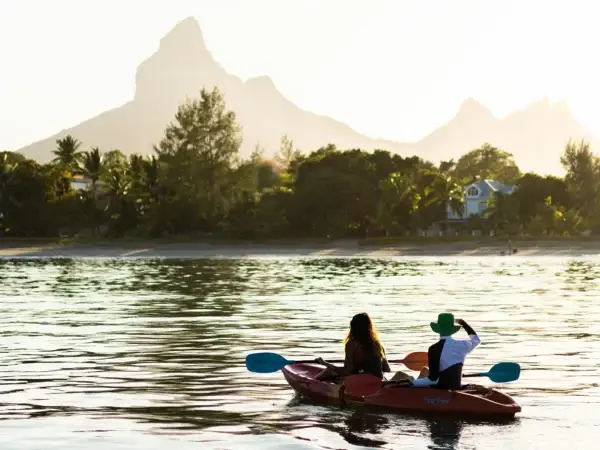
Kayaking on the Tamarin River (2.5 hours)
Paddle up the Tamarin River between mangrove and mountains, as far as the freshwater pools.
€35.00 -
The classic
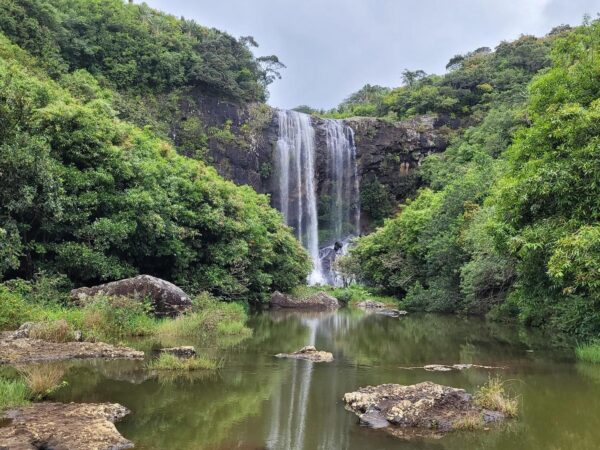
Tamarind Falls hike (3 hours)
The island’s best-known hike, to Tamarind Falls, in a small group, with a swim in the natural pools.
€39.00 -
From age 6
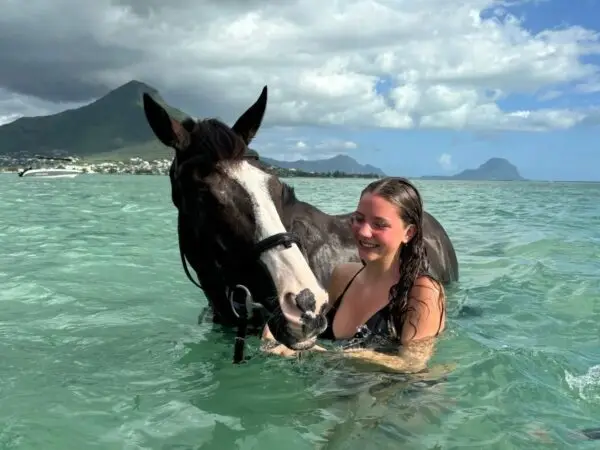
Swimming with horses at Flic en Flac (1 hour)
A horseback ride along Flic en Flac beach, then a swim with your horse in the lagoon, from age 6.
€90.00 / 3 hours

Agnès
You’ve picked your places. Now for the excursions
Make a list of the sites you’ve chosen and send it on WhatsApp with your dates: we’ll group them into excursion days with a driver, keeping the travel to a minimum.
FAQ on the top attractions in Mauritius
In a week, build an itinerary by area. You can plan the north with Port Louis and Cap Malheureux, the east with Île aux Cerfs and Belle Mare, then the southwest with Le Morne, Chamarel and the Gorges park. Keep one lighter day for the beach or a boat trip.
The sites that come up most often are Île aux Cerfs, Le Morne Brabant, Chamarel, Grand Bassin, Port Louis and the Pamplemousses Botanical Garden. This choice gives a good balance of lagoons, scenery, culture and nature. For a first trip, it’s a very solid base.
May to November is the most comfortable time to visit, with often drier weather and pleasant temperatures. Hikes, viewpoints and long drives are easier to manage. From December to April, the sea is warm but rain is more frequent.
Yes, in many cases, especially if you want to see several regions in a short time. A rental car makes it easier to reach Chamarel, Grand Bassin or the Black River Gorges. Just keep in mind that driving is on the left and avoid overloaded days.
The most frequently recommended beaches are in Belle Mare on the east coast, Trou aux Biches in the north and Blue Bay in the southeast. Flic en Flac is also a safe bet on the west coast. Depending on your taste, you’ll choose between long swims, snorkeling or sunsets.
Technically yes, but it’s not a good idea if you want to really see things. You’ll spend more time on the road than enjoying the sites. It’s better to plan two or three areas a day, with useful breaks and real visits.
If you have to make choices, start with Le Morne Brabant, Chamarel, Île aux Cerfs and Grand Bassin. Add Port Louis or the Pamplemousses garden depending on your tastes. These places cover the main sides of the trip without spreading you thin.
Chamarel works very well with children thanks to the colored dunes, the tortoises and the easy viewpoints. Île aux Cerfs also works very well for a beach and activities day. You can add the Pamplemousses Botanical Garden or a calm beach like Belle Mare.
The south has spectacular sites: UNESCO-listed Le Morne Brabant, Chamarel and its Seven Colored Earths with its waterfall, Gris Gris and its ocean-battered cliffs, the Blue Bay marine park and the authentic village of Souillac. The coastal road between Souillac and Le Morne links one viewpoint to the next. Allow a full day to see it all.