The history of Mauritius: origins, colonization and key dates
The history of Mauritius is the story of a Mascarene island named after Maurice of Nassau and ruled by several foreign powers until 1968. If you want to know who occupied the island, why its name changed and how its identity took shape, this guide covers the main dates, the places to visit and the legacies still visible today. Let’s go back in time.
You can see the history of Mauritius in person, too
We can add visits tied to the island’s Dutch and French periods to your trip: tell us on WhatsApp what interests you most.
The big picture of Mauritian history
Mauritius changed names, rulers and political course several times. First visited but not lastingly settled, the island came under Dutch rule, then became Isle de France under French administration. After Britain took it over in 1810, it kept a strong French imprint in its language, its law and its customs.
- Early visits, but no lasting settlement.
- Dutch rule before Isle de France.
- French administration of Isle de France.
- The British takeover of 1810.
- A lasting French imprint on language and law.
The history of Mauritius at a glance
Here is what to keep in mind:
- 🧭 The island had no native population before the first Europeans settled.
- 🛶 The Arabs and the Portuguese spotted it on their sea routes.
- 🌱 The Dutch set up the first settlements in the 17th century.
- ⚓ The French made Isle de France a major port.
- 📜 The British governed until independence in 1968.
The origins of Mauritius: first visitors, maps and landmarks
Mauritius had no native population. That matters, and it changes how you read the whole country. Before Europeans settled, the Mascarene Islands were mostly just lands spotted along the sea routes of the Indian Ocean.
Arab navigators seem to have known of these islands fairly early, although the traces are fragmentary. The Portuguese passed through the region in the early 16th century. They mapped, named and sailed around, then left without founding a colony. So the island stayed on the margins: a possible stopover rather than an organized territory.
Later, the French would speak of Isle de France, but that name belongs to another phase. For today’s travelers, this beginning with no native people explains why Mauritian identity was built through successive arrivals. It is a society born of displacement, trade and coercion, and later of cultural blending.
The Arabs and the first sightings of Mauritius
Long before the Europeans, Arab navigators already knew the island existed, around the 10th century. They called it Dina Arobi. It appears on the Cantino planisphere, one of the oldest known maps, which labels the three Mascarene islands Dina Margabin, Dina Arobi and Dina Moraze. The island was still uninhabited, though: the Arabs did not settle there and simply marked it on their Indian Ocean sea routes.
The Portuguese reach Mauritius
In the early 16th century, between 1507 and 1513, Portuguese navigators also landed on the island. They named it Cirne, probably a corruption of Cisne, Portuguese for swan. In 1512, Pedro Mascarenhas gave his name to the whole archipelago, the Mascarenes. Like the Arabs before them, the Portuguese did not found a colony: already well established in Asia and Mozambique, they left the island unoccupied.

The Dutch period: plantations, land clearing and upheaval
The Dutch took possession of the island in 1598 and named it in honor of Maurice of Nassau. From 1638, they tried to set up a more stable presence. The goal was practical: exploit the territory and secure a stopover in the Mascarenes.
This period left a heavy mark. The colonists cleared land, introduced crops, logged ebony and changed the environment. They also brought in slaves, which marked the start of a brutal social history. The settlements remained fragile, often hit by cyclones, disease and isolation.
The dodo disappeared during this era, although the exact causes include hunting, habitat destruction and introduced animals. In 1710, the Dutch abandoned the island, but their time there had already changed the landscape. When people talk about the Mauritian colonial legacy, this first episode matters more than you might think. It set a pattern of exploiting the land that continued under other flags.

Isle de France: the French imprint on Mauritius
Under French administration, the island took on a new importance. Isle de France became a strategic point for trade and war in the Indian Ocean.
⚓ French rule and the East India Company
France took possession of the island in 1715. The French East India Company first organized its development, with a strictly commercial approach. The island served as a relay station on the route to the Indies and quickly grew in importance.
🏛️ Port Louis booms
Port Louis took shape as a port, an administrative center and a naval base. Under Mahé de La Bourdonnais, in the 18th century, the city grew quickly. Public buildings, warehouses and shipyards gave the colony a real backbone.
🌿 Pierre Poivre and the crops
Pierre Poivre sought to diversify agricultural production. He introduced plants and worked to acclimatize spices on the island; his name remains tied to the Pamplemousses Botanical Garden. This was about more than botany: it also aimed at economic self-sufficiency.
🪖 Fortifications and rivalries
The island was a sensitive military position facing the British. Fortifications and coastal surveillance grew in importance. In this part of the world, controlling a port meant controlling sea routes.
🗣️ Language, law and customs
This period left a lasting mark. French still shapes public life, place names and part of the legal system. Even after the British conquest, this cultural foundation did not disappear, and it still holds today.


Slavery and Indian indenture: the human legacy
You can’t understand Mauritian history without facing two systems of forced or coerced labor. The first was slavery, established during the Dutch and French periods and maintained in the early years of British administration. The second was Indian indenture, which grew after abolition.
The main stages of this social history:
- 1721 (under Isle de France): first African and Malagasy slaves imported in large numbers
- 1810: the British takeover leaves slavery in place at first
- 1835: abolition of slavery in Mauritius (1834 in the British Empire)
- 1834: first Indian indentured workers, the start of a migration movement lasting several decades
- Aapravasi Ghat (Port Louis): UNESCO site marking the passage of hundreds of thousands of indentured laborers
- Legacies: Mauritian Creole, Hinduism, Tamil and traditions passed down through generations that are still alive today
Slavery shaped society, families, language and the distribution of populations. Mauritian Creole itself was born in this context of forced contact, domination and daily exchange. After 1835, the planters looked for a new workforce. Thousands of Indian workers then arrived under contract. Aapravasi Ghat, in Port Louis, is the best place to understand this shift. Many indentured laborers bound for the plantations passed through here.

From British colony to independence: the main political stages
In 1810, the United Kingdom took the island from France. The change was political, but not total. The British kept several elements already in place, such as part of the legal system and the everyday use of French. That choice explains a lot about Mauritius today.
In the 19th century, Port Louis remained a major administrative center while the sugar economy dominated. The abolition of slavery in 1835 transformed the labor system. The mass arrival of Indian indentured laborers then redrew society and the demographic map.
The 20th century saw political demands grow. Voting rights expanded gradually and local leaders gained more influence. Seewoosagur Ramgoolam became one of the central figures of this march toward self-government. After sometimes tense debates, Mauritius gained independence on March 12, 1968.

Mauritius today: memory, heritage and living legacies
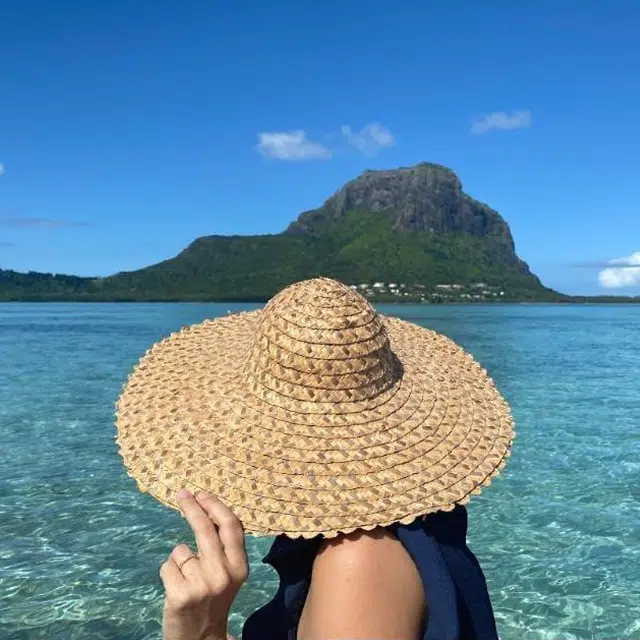
In Mauritius, the past stays very present. You see it in the landscapes, the ceremonies, the monuments and the political debates that are still unresolved. Le Morne Brabant holds a central place in the memory of slavery: this protected site, inscribed with Aapravasi Ghat on the UNESCO World Heritage list, recalls the resistance and the suffering of that period. These designations are not only for tourism: they also help pass on stories that were long downplayed.
The legacy shows up in the language too. Mauritian Creole, French, English and several languages of Indian origin are used side by side every day and reflect centuries of migration, domination, adaptation and blending. Commemorations of the abolition of slavery, the arrival of indentured laborers and independence play a real part in national life: they are more than ceremony.
The Chagos issue is a reminder that colonial history is not completely over. The dispute with the United Kingdom remains a sensitive political and human issue. Here too, the past still weighs on the present.


Mauritius history timeline: the dates to remember
To keep the history of Mauritius straight, follow a few well-chosen dates. Before any lasting settlement, the island was spotted by Arab and then Portuguese navigators. In 1598, the Dutch claimed it and named it after Maurice of Nassau.
Mauritius history timeline, in brief:
- Before 1598: Arab, then Portuguese, navigators spot the Mascarene Islands, with no lasting settlement
- 1598: the Dutch settle and name the island after Maurice of Nassau
- 1715: France takes possession and renames the territory Isle de France
- 1810: the British takeover ends the French period
- 1835 : abolition de l’esclavage à Maurice (1834 dans l’Empire britannique)
- 1834-1923: Indian indenture, with mass arrivals through Aapravasi Ghat
- March 12, 1968: independence proclaimed
- 1992: Mauritius becomes a republic (Commonwealth)
Historic sites to visit today
You can enjoy the beaches without opening a history book, but that would be a shame. In Mauritius, several places let you connect dates to real landscapes, buildings and stories.
🏛️ Port Louis: the historic capital
Port Louis is the easiest place to start. The capital holds much of the Mauritian story: the old port, colonial administrative buildings, historic neighborhoods and the central market. In a single day, you can get a feel for colonial trade, the arrival of indentured laborers and the city’s political role. It is dense, but never dusty.

🌊 Le Morne Brabant: the memory of slavery (UNESCO)
In the southwest, Le Morne Brabant carries a weightier memory. The site is more than a beautiful mountain listed by UNESCO in 2008: it recalls the history of the maroons (escaped slaves) and the violence of the colonial system. Even if you don’t make the climb, the landscape means more once you know this history.

🛕 Aapravasi Ghat: the memory of Indian indenture (UNESCO)
In Port Louis, Aapravasi Ghat is tied to the arrival of indentured workers from India after the abolition of slavery in 1835. The site, listed by UNESCO in 2006, marks a major chapter in the social history of Mauritius. The visit is short, but it stays with you.

🏘️ Mahébourg: the former port town and the Naval Museum
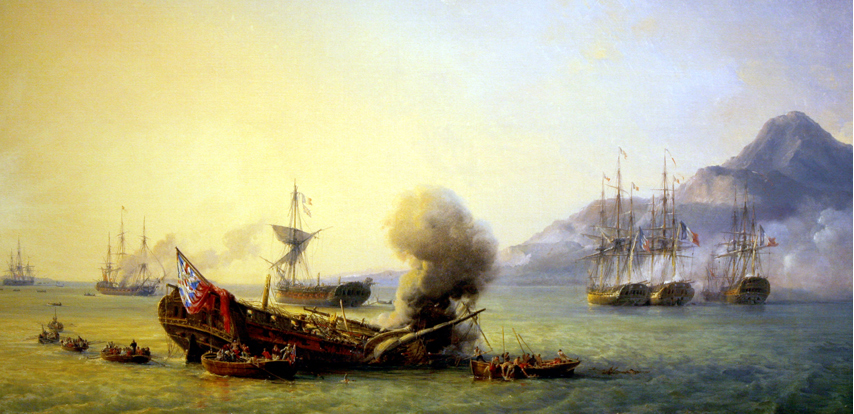
Mahébourg takes you out of the Port Louis-centered story. This former port town of the southeast is calmer and has a strong link to the maritime past. The Naval Museum sheds light on the French period and the Franco-British clashes of 1810, and its local setting brings the story to life.

🌿 Pamplemousses Botanical Garden: Pierre Poivre’s legacy
Behind the shaded paths and imported plants lies a more strategic story than you might expect. Pierre Poivre turned this 18th-century botanical garden into a place to acclimatize spices and useful plants. It’s a pleasant place to visit, but above all a living record of colonial plant exchange.

🏰 Eureka: the Creole colonial house
Eureka, in Moka, shows another side of Mauritian history: how the 19th-century colonial elite lived. This Creole house helps you understand the architecture, lifestyles and household organization of an era often missing from official accounts. It makes a good complement to the more monumental sites.

Agnès’s tip
If you like to understand a town through what it has left behind, Mahébourg is a great choice: go in late morning to visit the museum, then stroll along the waterfront, where the atmosphere is gentler than in Port Louis. I especially like this detour because it gives Mauritian history a human face.
After history, nature
Three activities you can book online to get close to the island: the Tamarind Falls (the 7 Cascades), the Tamarin River by kayak and swimming with horses.
-
 Mangrove and pools
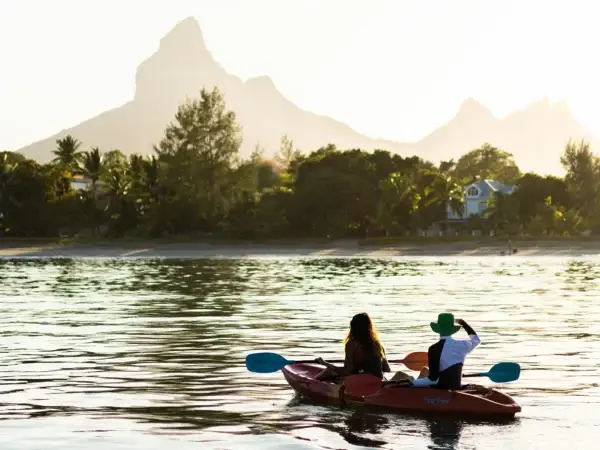
Kayaking on the Tamarin River (2.5 hours)
Paddle up the Tamarin River between mangrove and mountains, as far as the freshwater pools.
€35.00 -
The classic
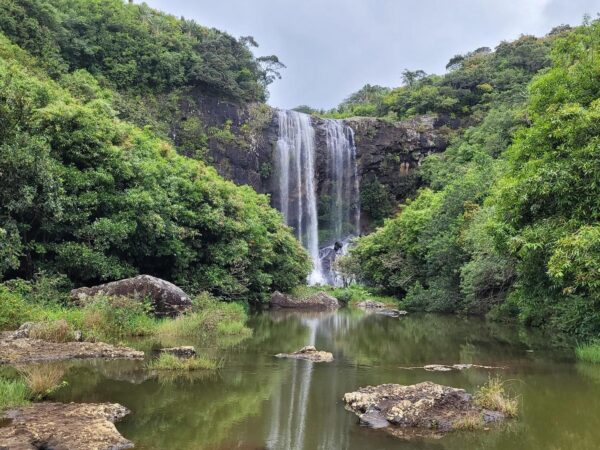
Tamarind Falls hike (3 hours)
The island’s best-known hike, to Tamarind Falls, in a small group, with a swim in the natural pools.
€39.00 -
From age 6
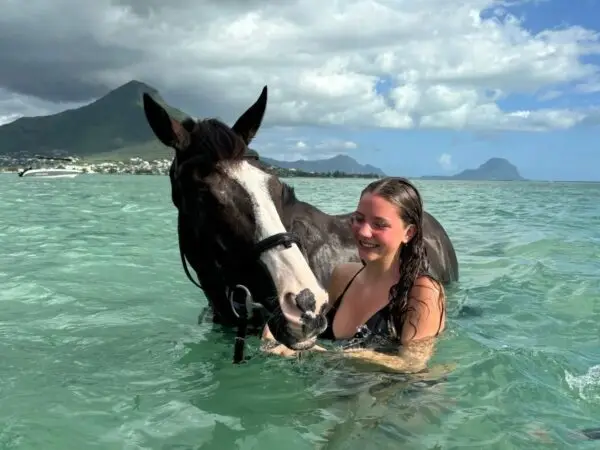
Swimming with horses at Flic en Flac (1 hour)
A horseback ride along Flic en Flac beach, then a swim with your horse in the lagoon, from age 6.
€90.00 / 3 hours

Agnès
From the island’s big dates to the dates of your trip
Share your arrival and departure dates and the number of travelers on WhatsApp, and we’ll build a stay that mixes beaches and cultural outings.
FAQ on Mauritius history
The island was known to Arab and then Portuguese navigators before lasting European colonization. The Dutch claimed it in 1598, which is often used as a starting point.
France renamed the island Isle de France in 1715 after the Dutch period. The name stayed in use until the British conquest of 1810.
The first to attempt lasting colonization were the Dutch in the 17th century. The Portuguese had spotted the island earlier, but did not establish a stable settlement there.
Slavery was abolished in 1835 under British administration. That date was a turning point in how work and society were organized in Mauritius.
Independence was proclaimed on March 12, 1968. Seewoosagur Ramgoolam was one of the leading figures of that period.
After the abolition of slavery, planters brought in Indian workers under contract. Aapravasi Ghat, in Port Louis, keeps the memory of those arrivals and of that system.
The most telling are Aapravasi Ghat, Le Morne Brabant, Port Louis, Mahébourg, the Pamplemousses Botanical Garden and Eureka. Each sheds light on a different side of the colonial and social past.
This diversity comes from colonization, slavery, Indian indenture and successive waves of migration. You can see it directly in the way Creole, French, English and several religious traditions coexist.