Religions in Mauritius: what to know before your trip
Several religions share a small space in Mauritius, and you can see it in the temples, mosques, churches and festival calendar. Hinduism is the largest, ahead of Christianity and Islam. This article explains how the religions in Mauritius live side by side, what you can visit and the simple etiquette to follow on site.
Temples, mosques and churches: visiting respectfully
We can include a visit to a temple or mosque in an excursion: tell us on WhatsApp what interests you and the area of your hotel.
Religions in Mauritius at a glance
- 🎯 Hinduism is the largest religion in Mauritius, with about 48% of the population in the 2022 census.
- ✝️ Christianity accounts for about 32% of the Mauritian population in the 2022 census, with a strong Catholic and Protestant presence.
- 🕌 Islam accounts for about 18% of residents in the 2022 census and is well established in the towns.
- 🙏 The Constitution protects freedom of worship and prohibits discrimination based on religion.
- 📅 Maha Shivaratri, Diwali, Christmas and Eid al-Fitr shape visits and can change opening hours.
Religious breakdown in Mauritius

The religious breakdown in Mauritius comes down to three main groups: the largest is Hindu, with a strong Christian presence and an established Muslim community. The table below uses figures published by Statistics Mauritius for the 2022 census. The percentages cover the population counted in 2022.
Religion | Share in 2022 |
|---|---|
Hinduism | 47,87 % |
Christianity | 32,29 % |
Islam | 18,24 % |
This mix explains why you will see Hindu temples, churches and mosques on the same trip. According to the figures Statistics Mauritius published for the 2022 census, Hinduism is the largest religion counted in Mauritius.
Religious diversity goes beyond numbers. You see it in public holidays, neighborhood customs and the way places of worship are part of daily life.
Freedom of worship and basic rules
Religious freedom is protected in Mauritius, and the Constitution prohibits discrimination based on religion. It also guarantees the right to practice or change religion.
The government supports several major communities, including the Catholic Church, the Church of England, the Presbyterian Church of Mauritius, Seventh-day Adventists, Hindus and Muslims. This helps explain why religious festivals are visible in public spaces and why many places of worship are well kept and well attended.
In practice, you can visit sites open to the public without difficulty as long as you stay discreet in dress and behavior. At the large mosques and temples the welcome is generally calm, and the spiritual atmosphere is often strong.
Hinduism, Christianity, Islam: what to know
The place of Hinduism
Hinduism strongly shapes Mauritius, since it has the largest share of the population and sets the festival calendar. You see it in the big pilgrimages, the temples of the north and center, and in the crowds at Grand Bassin, also called Ganga Talao, during Maha Shivaratri.
The pilgrimage to Ganga Talao is the best moment to understand the communal side of Hindu practice. You see offerings, major statues and a relationship to the place that goes beyond a heritage visit.
The Triolet Maheswarnath temple is described as the largest Hindu temple on the island and rounds out this overview. It shows another side, with impressive architecture and a more local feel, and it is easier to fit into an itinerary between the north and the center of the island.
Christianity in Mauritius
Christianity holds a major place in Mauritian society and is visible in several urban neighborhoods. Mauritian Christians include Catholics and Protestants, which explains the variety of churches and customs.
- Churches in Port Louis and in coastal towns are often part of neighborhood life.
- Major Christian festivals are part of the public holiday calendar.
- Christianity shows up as much in heritage as in Sunday services.
Islam in daily life
Islam is well established in Mauritius, with mosques visible in Port Louis, Beau Bassin-Rose Hill and elsewhere. The Jummah Mosque, built in the 19th century, remains an important heritage landmark in the capital.
Al Aqsa and Rivière Citron are among the old mosques often cited, which shows the community’s deep historical roots. For travelers, these sites are worth a visit and help explain the city.
Buddhism and other minorities
Buddhism and other minority religious communities are less visible in Mauritius than Hinduism, Christianity and Islam: you mostly come across small pagodas and quiet places of prayer, notably around Chinatown in Port Louis.
If your temples, mosques and sights are spread out, group your visits by area: the north, the central plateau and the west coast.
Landmark places of worship to see
To visit places of worship in Mauritius, start with Grand Bassin (Ganga Talao), the Triolet Maheswarnath temple, the Jummah Mosque in Port Louis and the churches of the capital: together they cover Hinduism, Islam and Christianity, from pilgrimage to urban heritage.
Grand Bassin, the most symbolic place
Grand Bassin, also called Ganga Talao, sits in the middle of the mountains and remains the most symbolic place for Mauritian Hinduism. Each year, according to estimates reported in the Mauritian press, several hundred thousand pilgrims go there in procession for Maha Shivaratri, which completely changes the atmosphere of the site.
On site you see a lake, large statues and a peaceful atmosphere around the offerings. The site is especially worth a visit if you want to see religion lived in its most communal form.
Hindu temples: Triolet Maheswarnath and other landmarks
The Triolet Maheswarnath temple stands out for its size and its place in the north of the island. It is a good point of comparison with the smaller shrines, often more local and closer to the daily life of families.
- Look at the entrance, the statues and the area set aside for offerings.
- Notice whether the place is used for both visiting and prayer.
- Tell a large pilgrimage temple from a neighborhood temple.
Historic mosques: Jummah and Al Aqsa
The Jummah Mosque, built in the 1850s in the heart of Port Louis, is the best known on the island. The Al-Aqsa Mosque, founded in 1805 in Plaine Verte, is considered the oldest in Mauritius: together they help explain the place of Islam in local history.
These mosques are interesting for their religious role as much as for their place in the city. They show another side of the island, one found in its towns rather than its big landscapes.
Want to fit Grand Bassin, Port Louis and the temples of the north into your route? We organize the stops for you so you do not waste time on the road.
Religious festivals and the calendar of your trip

The Mauritian calendar is marked by several religious festivals that can affect when sites are busy. If you travel at that time, plan your trips for the hours when roads and sites are quieter.
Public holidays to know
Several religious festivals are public holidays in Mauritius, including Maha Shivaratri, Diwali, Christmas, the Assumption, Eid al-Fitr, Ugadi, Thaipusam and Ganesh Chaturthi. For a traveler, this can change when some shops open and how busy the towns are.
- Maha Shivaratri, with the large processions to Grand Bassin.
- Diwali, very visible in homes and neighborhoods.
- Christmas and the Assumption, firmly part of the public calendar.
- Eid al-Fitr, which is also a major social occasion.
Maha Shivaratri and Grand Bassin
Maha Shivaratri turns Grand Bassin into a large Hindu gathering place. Pilgrims arrive by the thousands, often in procession, and the roads around the site get very busy.
The site is calm outside peak times, but during the festival it gets very crowded and rather insistent monkeys hang around the offerings. If you go then, expect a living spiritual site, not a simple photo stop.
Christmas, the Assumption and Eid: what changes
Christmas, the Assumption and Eid al-Fitr are not celebrated the same way, but all of them affect the local rhythm. Churches are busier at Christmas and the Assumption, while Eid al-Fitr is marked by morning prayer and meals shared with family.
These holidays can change shop hours and crowds at places of worship. Check the dates before planning your visits, since Muslim festivals follow the lunar calendar.
How to visit places of worship without a misstep
Visiting a place of worship in Mauritius mostly takes common sense and a little attention. Modest dress, calm gestures and respect for prayer areas are enough in most cases.
Aim for early morning visits, before the heat and humidity build. In December, heat and humidity make midday visits more tiring. If you string together several visits in the west or southwest, keep time for breaks, since packing in too many stops ends up wearing you out.
- Dress modestly and cover up.
- Ask permission before photographing a prayer area, and take off your shoes before entering a temple or mosque.
- Keep a discreet manner at the entrance and inside.
- Allow more time when the site is on a busy road on the west coast.
- Check the site’s hours before your visit and adjust your timing to the time of day.
JC’s tip
At a temple or mosque, I suggest arriving without rushing and watching what other visitors do. At very busy sites like Grand Bassin, the most common mistakes come from clothing that is too revealing or behavior that is out of place.
Three activities to book for your trip
The climb up Le Morne Brabant, a UNESCO site, a private catamaran to the northern islands or a sunset kayak.
-
 UNESCO summit
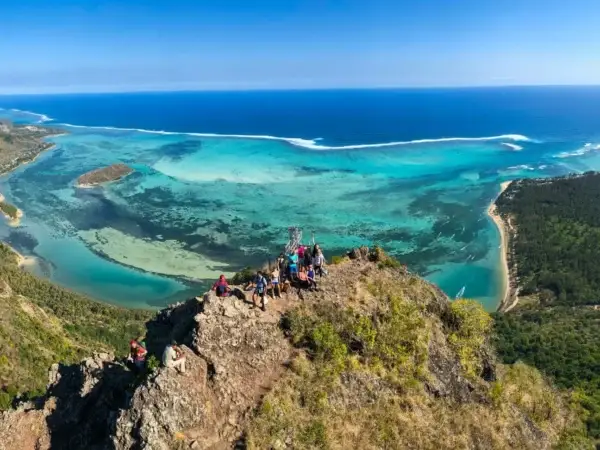
Le Morne Brabant hike (4 hours)
The climb up Le Morne Brabant, a UNESCO site, to the summit and its view over the southwest lagoon, with a certified guide.
€45.00 -
Private catamaran
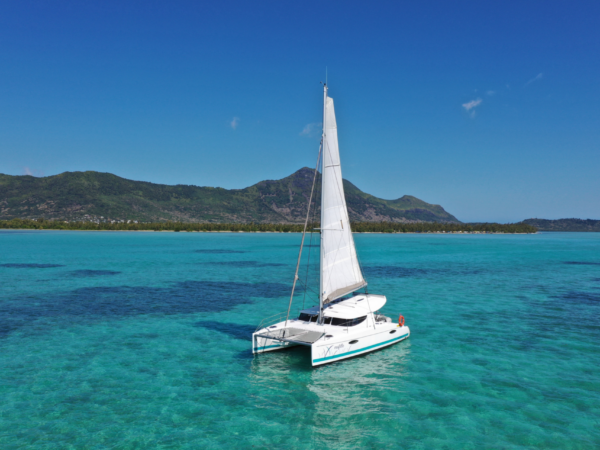
Day trip to the 3 northern islands on a private catamaran
The catamaran all to yourselves, out to Coin de Mire, Flat Island and Gabriel Island: snorkeling, a barbecue on board and drinks.
€750.00 / day -
Sunset
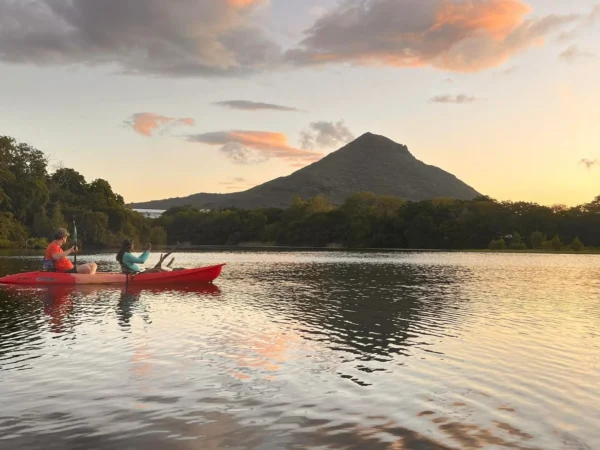
Sunset kayaking on the Tamarin River (1.5 hours)
An hour and a half of kayaking on the Tamarin River as the sun sets behind the bay.
€46.00

Agnès
A religious festival during your trip? Let’s talk about your dates
Send us your dates on WhatsApp: we check which festivals of the calendar fall during your stay and adjust the visits accordingly.
FAQ about religion in Mauritius
Muslims make up about 18% of the Mauritian population in the 2022 census. That is a significant share, visible in the towns, the mosques and some festivals on the calendar.
Islam is one of the main religions of Mauritius and is well established in the country. You see it in Port Louis, Beau Bassin-Rose Hill and several neighborhoods where mosques serve both as places of worship and as community anchors in the city.
Hinduism is the main religion in Mauritius. In the 2022 census, nearly 48% of the population is Hindu, which explains its weight in festivals, temples and pilgrimages.
No, Mauritius has no single official religion. The Constitution protects religious freedom and also prohibits discrimination based on religion.
Yes, Mauritius welcomes Muslim travelers and people who eat halal, since Islam is present and mosques are numerous. You can travel with confidence while keeping to your dietary and prayer practices.
Yes, you can visit many places of worship as a tourist as long as you stay discreet and respectful. Wear modest clothing that covers you, keep your movements calm, ask before taking photos and take off your shoes before entering a temple or mosque.
Watch the customs of the place before going further in. If an area seems reserved for worship, look without intruding, and the visit goes smoothly.