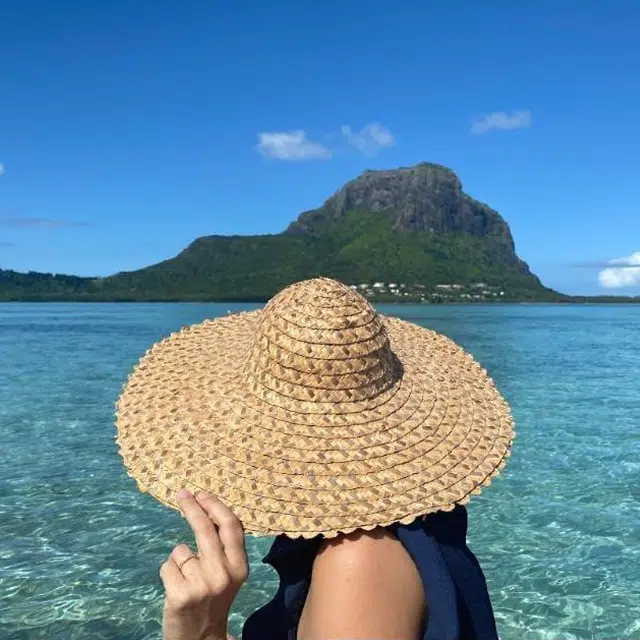
Is Mauritius French or independent?
Mauritius is not French: it is the main island of the Republic of Mauritius, a sovereign state in the western Indian Ocean. The confusion comes from its French colonial past, the role of French in daily life and its relative closeness to Réunion. In this article, we explain what clearly sets Mauritius apart from a French territory and what that means during your stay.
Plan your trip with a team on the island
Agnès and JC plan your excursions, hotels and transfers and answer your questions. Message us on WhatsApp, even with the most practical ones.
Is Mauritius French? The short version
- 🌍 Mauritius lies about 200 km (125 miles) from Réunion, which is French, but the two islands do not have the same status.
- 🧭 Mauritius is part of the Mascarene Islands, in the southwest Indian Ocean.
- 🕓 Local time is UTC+4.
- 👥 The Republic of Mauritius has about 1.26 million inhabitants.
- 🌊 Madagascar is about 1,000 km (620 miles) from Mauritius.
Mauritius is not French: the short answer

Mauritius is not a French département, a French overseas collectivity or a French colony today. The island belongs to the Republic of Mauritius, whose capital is Port Louis. The country has its own institutions, its own currency and its own national identity.
That means arriving at Sir Seewoosagur Ramgoolam International Airport is nothing like arriving in Réunion. You are entering a different country, with its own border controls, its own currency (the Mauritian rupee) and its own entry rules. License plates, signs and official documents may also be in English, even if a conversation at the Port Louis market often carries on in French or Creole.
- Political status: Mauritius is an independent country and a republic.
- On the ground: French and English are widely understood, while French and Creole dominate spoken conversation.
For visitors who speak French, this is reassuring: you can usually explain a request, understand an instruction or chat with a driver without speaking fluent English. In Grand Baie, Flic en Flac or the streets of Mahébourg, asking for a price, directions or a dish without chili comes fairly naturally.
The confusion sometimes comes from products and habits. You can pay for a dholl puri, a bowl of mine frite or a taxi ride in rupees, even if the seller answers you in French. In the same way, a place like Trou aux Biches or Le Morne is not part of French administration: these are Mauritian places, with their own services and local rules.
From French colony to independence

History explains the French presence without calling today’s Mauritian sovereignty into question. Four milestones are enough to tell the French period, British administration, independence and the republic apart.
| Period | Historical milestone | What to remember |
|---|---|---|
| 1715 à 1810 | Isle de France | Mauritius was called Isle de France during French colonization. |
| 1810 | Port Louis | The British took the island in 1810, and the handover was confirmed by the Treaty of Paris in 1814. |
| March 12, 1968 | Port Louis | Mauritius became independent while remaining in the Commonwealth. |
| 1992 | Republic of Mauritius | The country became a republic, which is separate from the independence it gained in 1968. |
These dates take on extra meaning when you visit Port Louis. The historic district, the old houses and the documents kept at the Blue Penny Museum show how important the port was to trade at the time. In Pamplemousses, the name of the Mon Plaisir château also reflects the French period, while institutions and administration were later shaped under British influence.
March 12 is now the date of the national holiday. If you travel around that date, you may see Mauritian flags and local ceremonies, but this is not a French or British holiday. Independence in 1968 first made Mauritius a sovereign state within the Commonwealth, and the move to a republic came later, in 1992.
The French period left a lasting mark on the language, the law and some habits. The British period also shaped the administrative framework and the use of English. These legacies still sit side by side, without making Mauritius a French country.
Why French is so common on the island

French is still very present in Mauritius because the country’s history lives on in conversations, families, the media and daily habits. You also find it in newspapers, menus, commercial announcements and tourism-related exchanges, especially in Grand Baie and on the west coast.
French is still very much alive in conversation
A French-speaking traveler usually feels at ease quickly in everyday exchanges. In many situations, Mauritians switch from Creole to French depending on who they are talking to, especially with visitors from France, Belgium or Switzerland. A driver might give you directions in French, then use a Creole word with a colleague.
This continuity does not mean that Mauritius is culturally French. The island has an identity of its own, fed by Creole, Indian, African, Chinese, European and British influences. French is one language of communication among others, not a marker of nationality. In a shop in Port Louis, or at a table serving gâteaux piments in Mahébourg, language alone does not define the culture of the place.
A language shared with Creole and English
Usage varies by place and by the person you meet. You will often hear several languages in a single day.
- At the hotel, French often works for talking about schedules, a meal or a special request.
- At the restaurant, Creole is common among Mauritians, while French makes ordering easier with travelers. You can ask for a rougaille or a curry in French, then hear Creole among the staff.
- On the street, conversations may start in Creole and then continue in French.
- For administrative procedures and formal documents, English keeps an important place: it is the language of the Mauritian Parliament and most official texts. Official signs and forms may therefore need a little more attention.
Why this reassures French-speaking travelers
Understanding directions quickly means less hesitation when you take a taxi, ask for a route or confirm a meeting. Being able to communicate also helps you spell out what you expect from an outing: duration, how much walking, pickup or sea conditions.
French does not remove every vocabulary difference, especially with Mauritian Creole. Listen to the terms people use, ask for a rephrase when needed and avoid assuming that a local usage means exactly what it means elsewhere. For a transfer or an excursion, get the time, the place and what is included in the price in writing.
What this changes for your stay

The presence of French makes the trip smoother, but it does not replace the practical checks that come with any foreign destination. You are traveling in an independent country with its own habits, currency and organization.
Speaking French on the island: what is easy
In everyday exchanges and depending on who you are talking to, French can generally make things easier for transportation, lodging, meals and excursions. You can ask a driver to wait for you, check where a meeting point is or explain a dietary need in clear terms.
The local currency is the Mauritian rupee. Even when the conversation is in French, always check the currency quoted, what is included and how a price is presented. This matters most for taxis, small purchases and activities booked outside the hotel.
Bookings and points to confirm before you leave
Being able to communicate is especially useful when you need to confirm concrete details before departure.
- Ask for the exact pickup time and the meeting point.
- Give your fitness level for a hike, a boat trip or a water activity.
- Check whether equipment, transport and meals are included in the service.
- Mention any mobility limits, allergies or children in the group.
If you are choosing between several excursions, compare transport, schedules and what is included. We can point you to an outing that fits your plans, whether on the west coast, in the southwest or from the east.
Agnès’s tip
I recommend asking for written confirmation of the time, the departure point and what is included. A common pitfall is comparing two offers without checking the transport. For walks and excursions, leave in the morning if you can, then plan a break in the shade in the middle of the day.
Mauritius’s current status, in plain terms

The Republic of Mauritius is a sovereign country, and the island of Mauritius is its main island. The word “island” describes a geographic territory, while the word “republic” describes the country’s political framework.
An island, but not French territory
The island of Mauritius is not under French administration. It does not work like Réunion, a neighboring French island in the Indian Ocean. The confusion often comes from the French language, the shared history of the region and the closeness of the two destinations.
The Republic of Mauritius covers about 2,000 km² (770 square miles). Port Louis is the capital, but most of what travelers come for lies beyond the administrative city: the coasts, the villages and the central plateau.
Republic, Commonwealth and independence
These three ideas do not mean the same thing.
- Independence means Mauritius has not been a British colony since 1968.
- Commonwealth membership reflects the historical link with the former British Empire.
- Republic status, adopted in 1992, confirms that the country is not a British monarchy.
Political decisions are made in Port Louis, not in Paris or London. Visitors therefore enter a separate country, even if the French they hear feels familiar.
Three points to avoid confusion
Mauritian nationality, the French language and French colonial heritage are three different things. A person can speak French in Mauritius without being French, just as a country can use English without being British.
To place it on a map, Mauritius lies between Réunion to the west and Rodrigues to the east. This position in the Mascarene Islands explains the geographic closeness, but not the administrative status. When you prepare your trip, check the entry formalities specific to Mauritius rather than relying on those for Réunion.
Mauritius today, up close
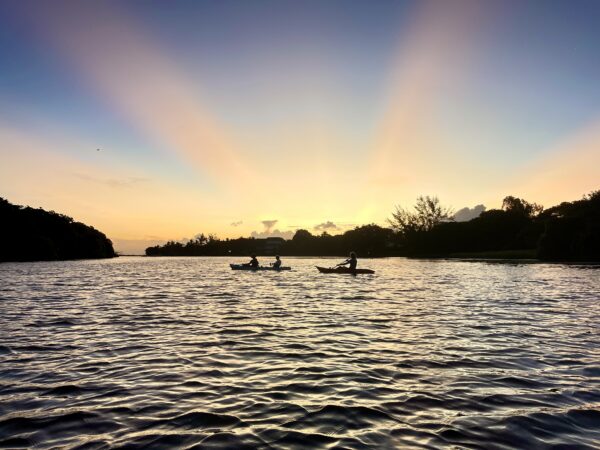
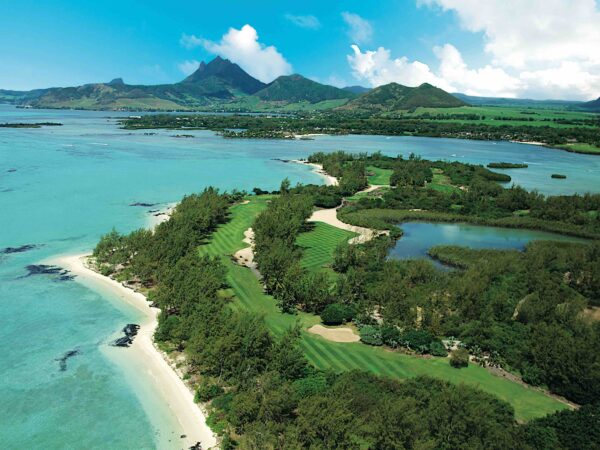
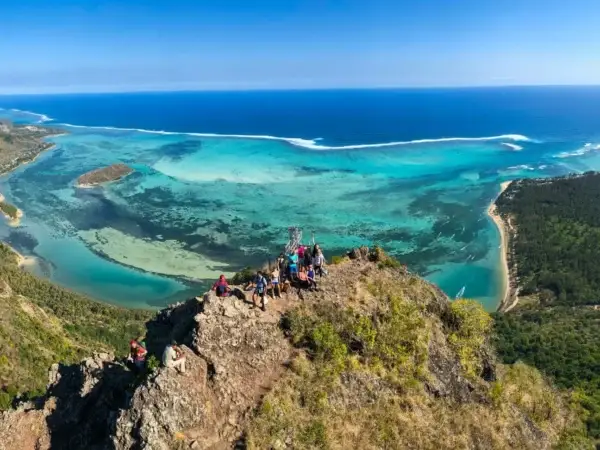
A sunrise kayak trip, a day on a private boat around the islands of the east, or the climb up Le Morne Brabant, a UNESCO World Heritage site.
-
 Sunrise
 kayaking on the Tamarin River (1.5 hours)
Sunrise over the Tamarin River, from a kayak, in the quiet of early morning.
€35.00 -
Private boat
Full day on a private boat around the eastern islands
Your own boat and skipper for the day in the island’s largest lagoon: the eastern islands, snorkeling and a beach barbecue.
€380.00 / day -
UNESCO summit
Le Morne Brabant hike (4 hours)
The climb up Le Morne Brabant, a UNESCO site, to the summit and its view over the southwest lagoon, with a certified guide.
€45.00

Agnès
A foreign country where people understand you: let’s plan your trip
Now that the question is settled, let’s talk about your trip: message us on WhatsApp with your dates and what you are looking for, whether a hotel, a villa or excursions.
FAQ on the status of Mauritius
No, Mauritius does not belong to France. It is the main island of the Republic of Mauritius, an independent country with its own institutions and its own currency. The Mauritian state exercises authority over the island, with no French administration today.
The presence of French and the memory of Isle de France explain the mix-up. They do not, however, give France any administrative role on the island today.
The state is Mauritian and its citizens can hold Mauritian nationality, but an island itself has no nationality in the administrative sense. Mauritius is a Mascarene country in the western Indian Ocean.
The term “Mauritian” therefore refers to the people and to anything that belongs to the country. Speaking French in Mauritius does not turn a Mauritian into a French citizen.
The Republic of Mauritius governs the island of Mauritius. Neither France nor the United Kingdom administers the country, despite the French and British legacies visible in its language and history.
This distinction matters during your trip: you are not staying in French territory but in a sovereign state. The rules for your stay, payments and local habits are therefore those of Mauritius.
Yes, French is very present in spoken exchanges in Mauritius. It lives alongside Mauritian Creole, which is very common in daily life, and English, which is used mostly in more formal settings.
You will often hear a natural mix of Creole and French in the same conversation. That is part of the country’s multicultural identity, not a sign of belonging to France.
Yes, a French-speaking traveler can generally get by for everyday needs, including taxis, hotels, restaurants, shopping and meeting up for an excursion. French is often understood in these settings, but that can vary with the person and the situation, and Creole or English may be used instead.
For a specific request, write down the key details: date, number of participants, departure point and any special need. This avoids misunderstandings, even when the person you are dealing with switches between French and Creole.
Mauritius is generally easy to visit. Entry rules depend on your nationality, so check the official requirements for your own passport before you book. As an example, the French government’s travel advice says French citizens need no visa for a tourist stay of up to 90 days, provided the passport is valid for the whole stay. Keep in mind that the currency is the Mauritian rupee and that local rules apply, not French ones.
To enjoy the island in good conditions, split your plans into four periods: from January to March, the southern summer is hot and humid, with a cyclone risk; from April to June, adjust your activities to the shift toward a drier, milder period; from July to September, the weather is generally drier and milder; from October to December, heat and humidity return gradually, with possible showers in the late afternoon.